A cobbled market street at night lined with lit stone arcades, stalls and strings of red and white bunting
Active development · November 2026 update

Lightspire RPG · Development journal

The world,one month at a time.

A dark-fantasy RPG built in the open. Each month we share what landed: the character creator, combat, movement and the places Lightspire's history is set.

Current focus

A kit for every location

Latest milestone

Opening chapters' locations signed off

Lightspire: Cards

Out now in Early Access

Development, shown honestly

Monthly journal

These are working development captures and art studies, not a cinematic promise. Grey test arenas, placeholder opponents and rough animation are part of the process.

Latest update · November 2026

From the page to the first playable chapters

October took the game from the page to play. The first three chapters of The Outcast Knight now run end to end in a development build, every location in them has been signed off, Luna was regrown by procedural rules, and every race now loads in the character creator. Around the game, Lightspire: Cards went from Steam Next Fest to Early Access, the books had their biggest continuity pass yet, and the website gained a wiki.
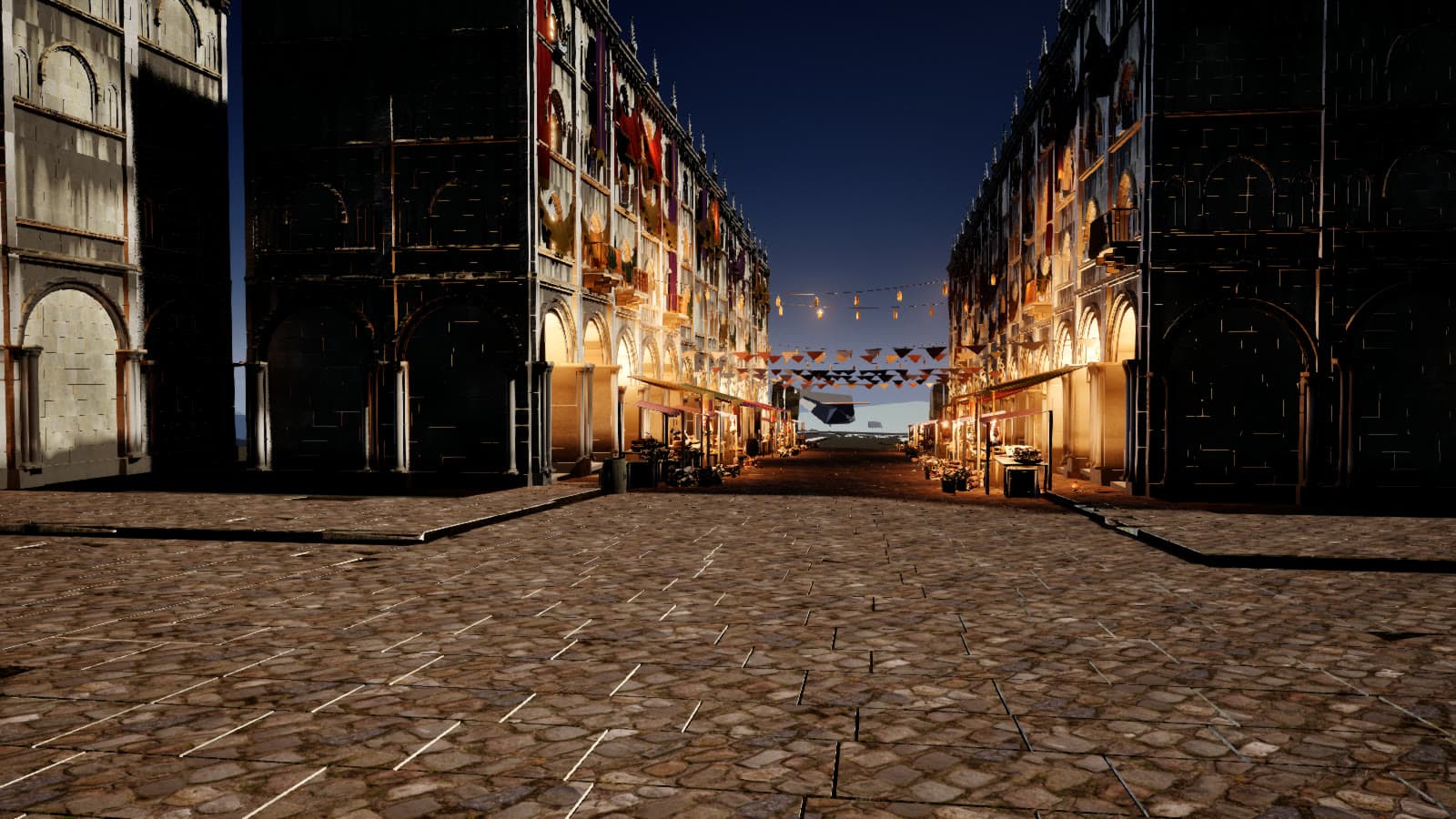
A cobbled market street at night lined with lit stone arcades, stalls and strings of red and white bunting
Trade market · Night lighting pass

The first three chapters play end to end

The opening of The Outcast Knight is now a connected run through its first three chapters. The tavern cutscene hands over to a walk and talk with Usso through the slums, then on to the graveyard, the trade market and the first boss fight, with checkpoints, saving and loading throughout, about 43 minutes in all. Usso keeps your pace, tucks in behind you where the lanes narrow, and the conversation waits if you run ahead. Every line is still a placeholder and some characters are stand-ins, but the whole stretch plays from start to finish.
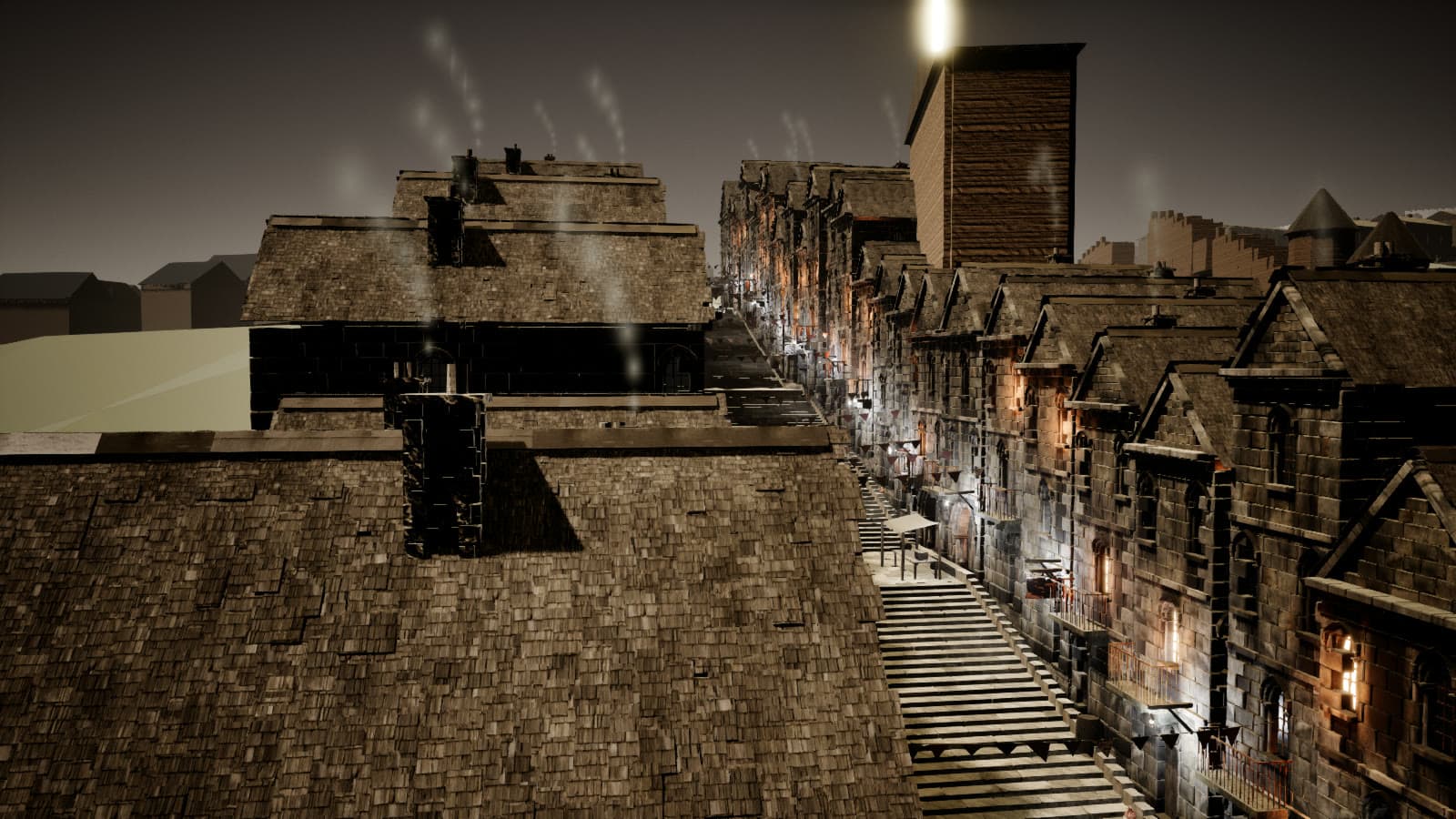
Stone stairs descending between rows of timber-framed slum houses at dusk, with chimney smoke rising
Slum stairs · Fight location

From concept art to engine

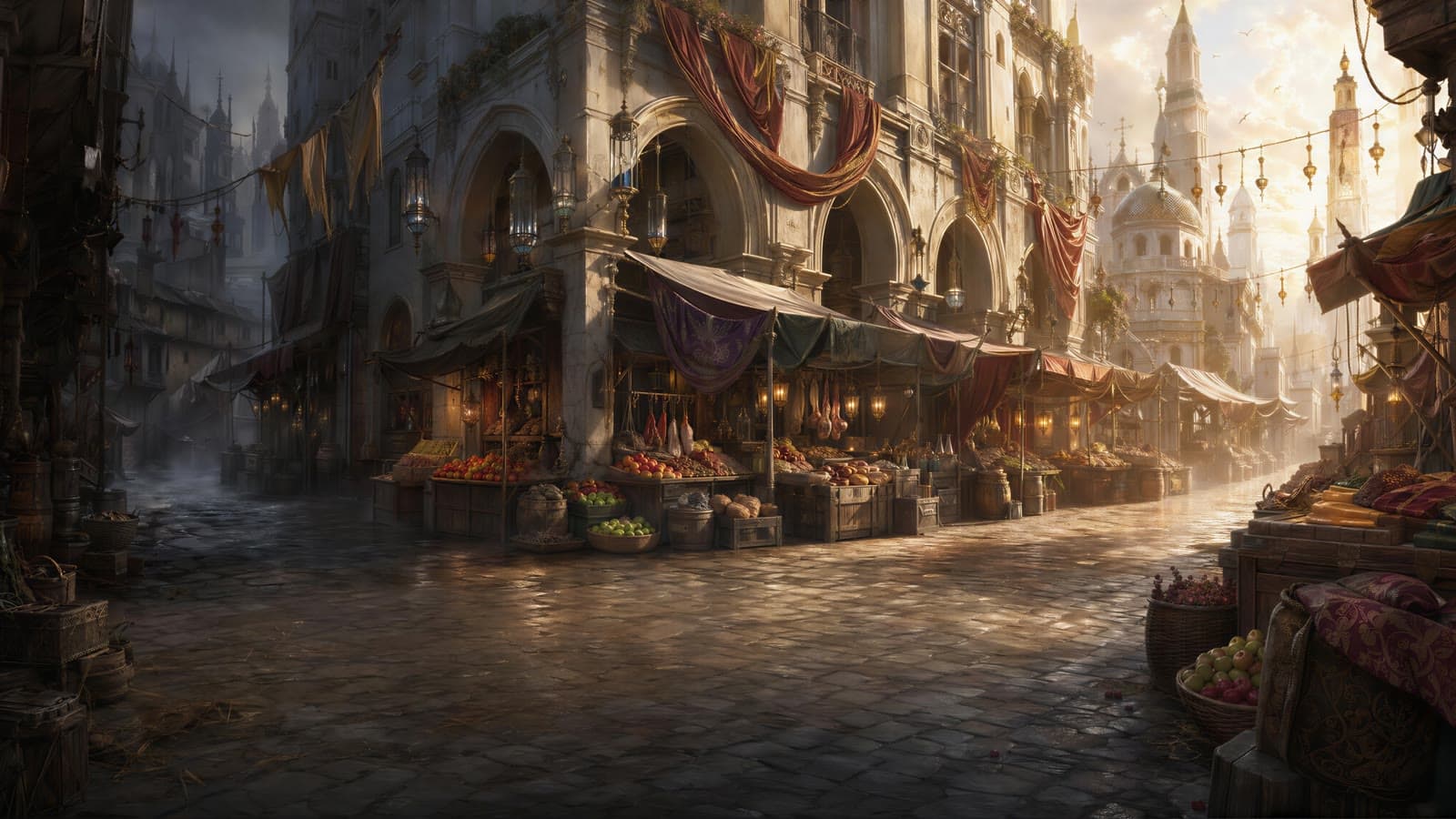
Each location in the opening chapters started as a painted backdrop for Lightspire: Cards. In October they were rebuilt in Unreal Engine to match, with props, lanterns, fog, weather and full lighting, and by 19 October every one of them had been signed off. Only animation and voices are still to come. Pick a location and drag across the picture to compare the painting with the current render.
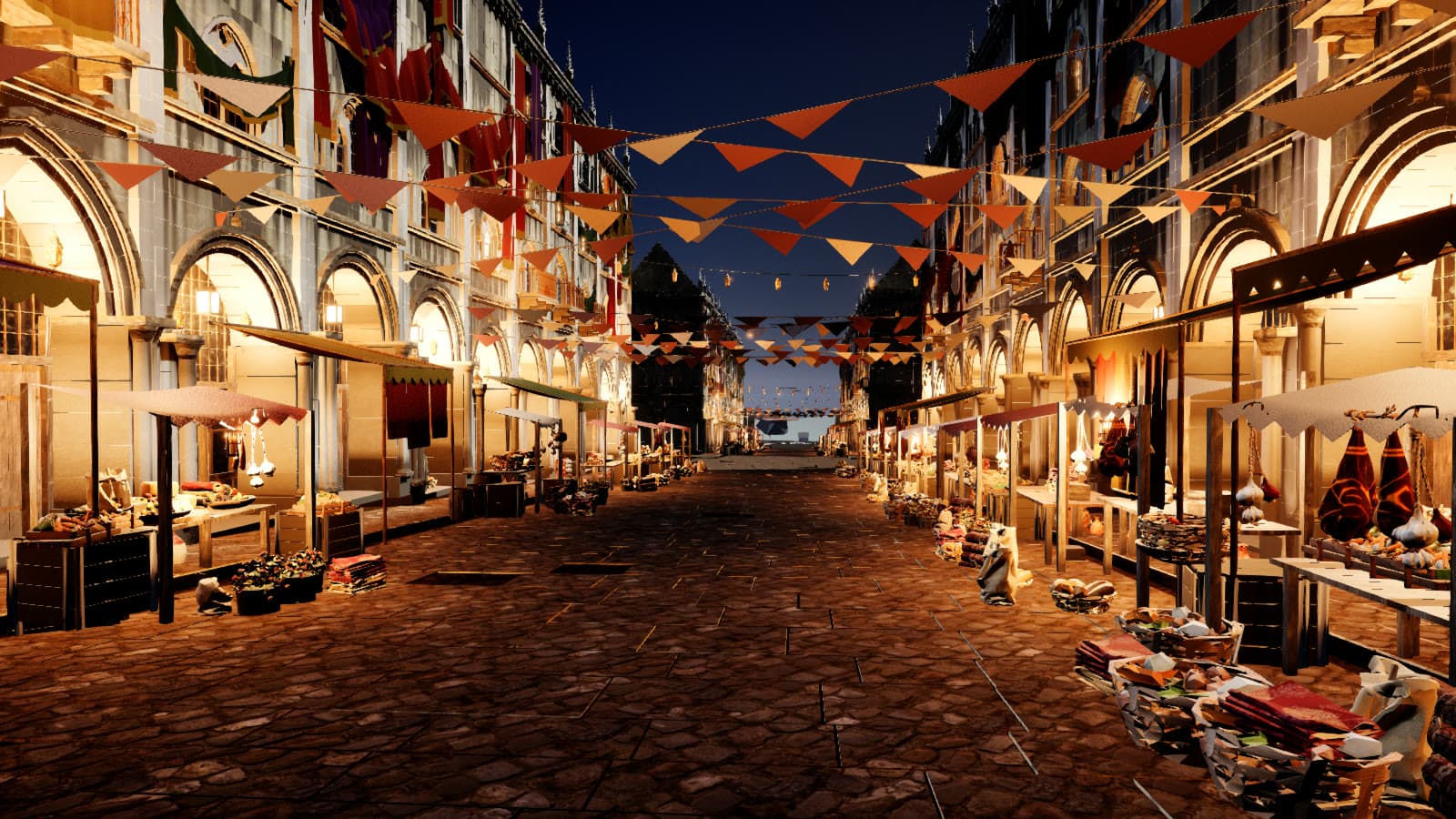
In-engine market street at night with lit arcades, stalls and red and white bunting
Painted concept of a misty market street between grand stone arcades with fruit stalls
⇆
Concept artIn engine
Drag across the picture to compare · Work in progress, not final art

The first area after the opening. Arcades, stalls and bunting are placed by the same procedural rules as the rest of the city, shown here at night.

A kit for every place

With the opening signed off, the work moved outwards. Building kits are now under way for the rest of Lightspire's locations, from the cathedral and the citadel's 150-metre spire to the undercity, the city walls and the lands beyond Luna. Each kit is judged on its shapes alone first, as grey clay. Lighting will then be done once, for the whole world, rather than place by place.

location kits started
94
location kits started
already building in the engine
62
already building in the engine
grey clay boards rendered for review
153
grey clay boards rendered for review
gates in Luna's city walls
26
gates in Luna's city walls

Luna, grown by code

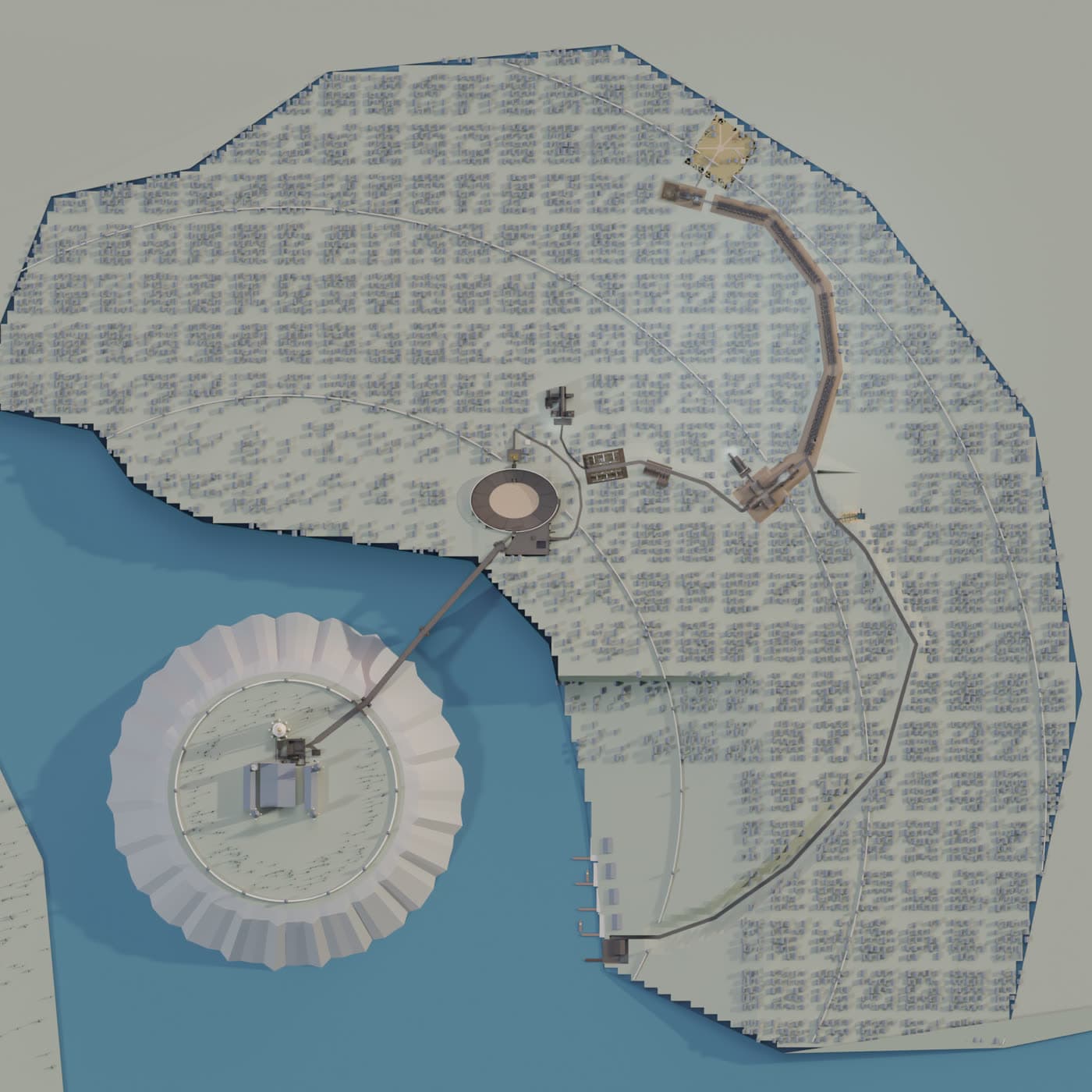
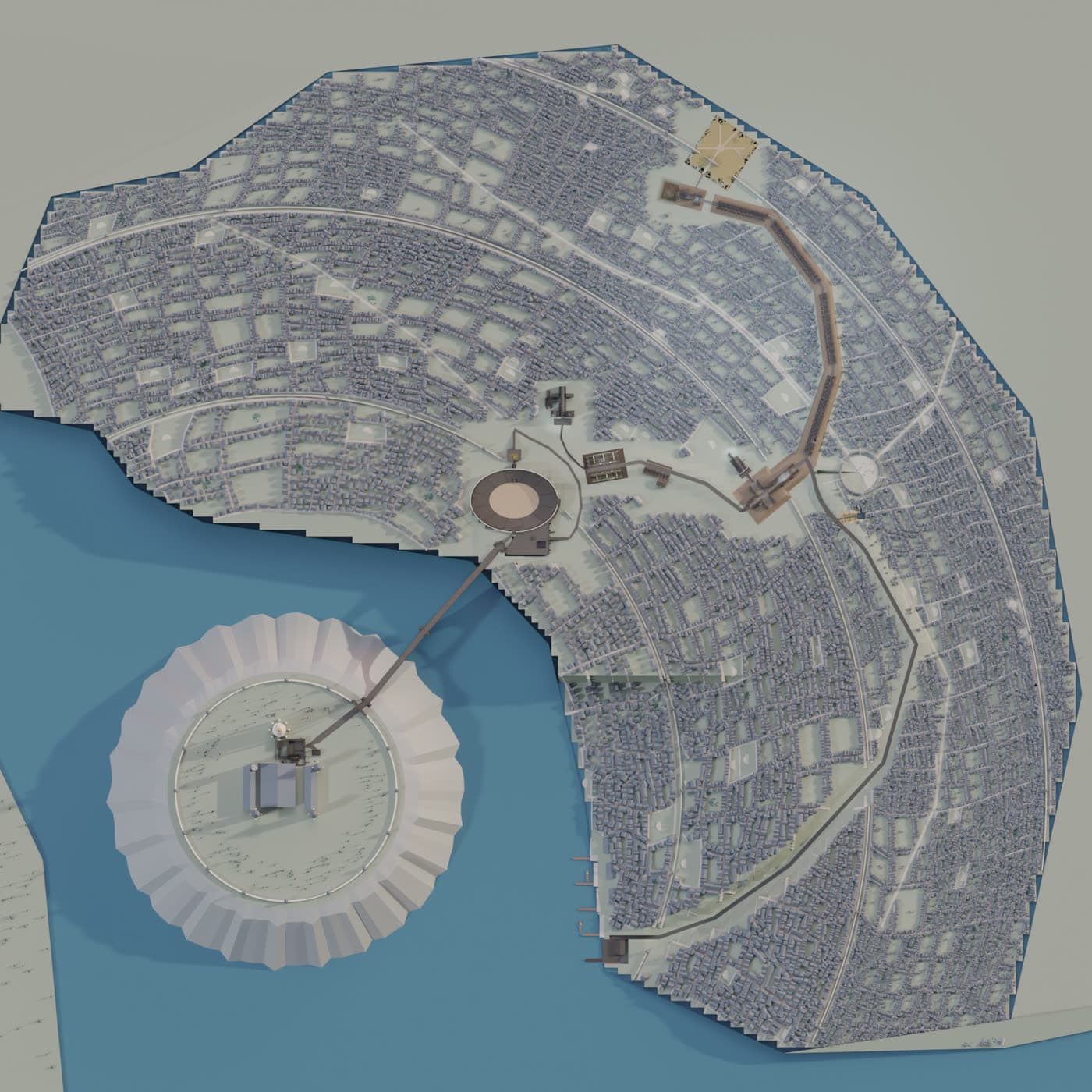
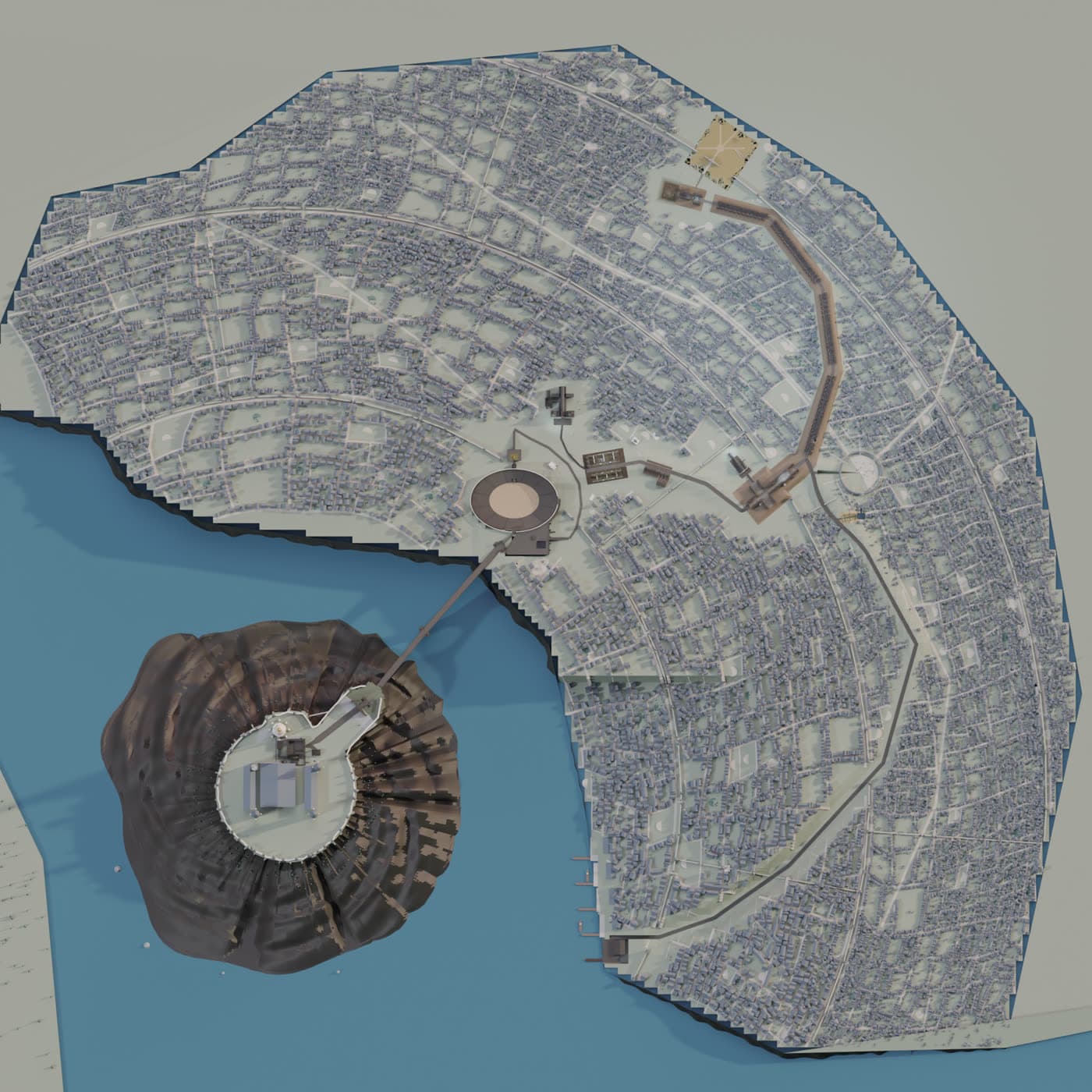
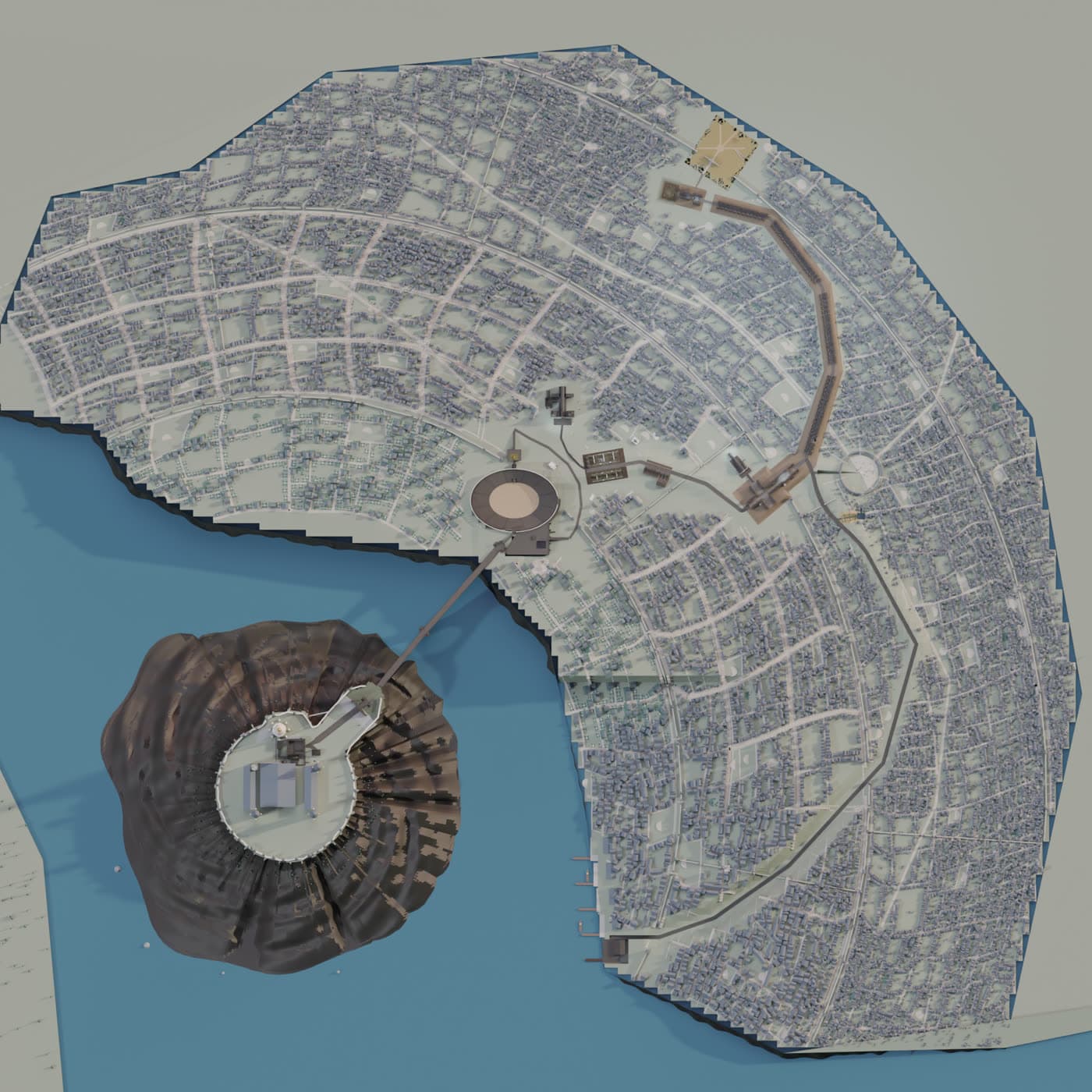
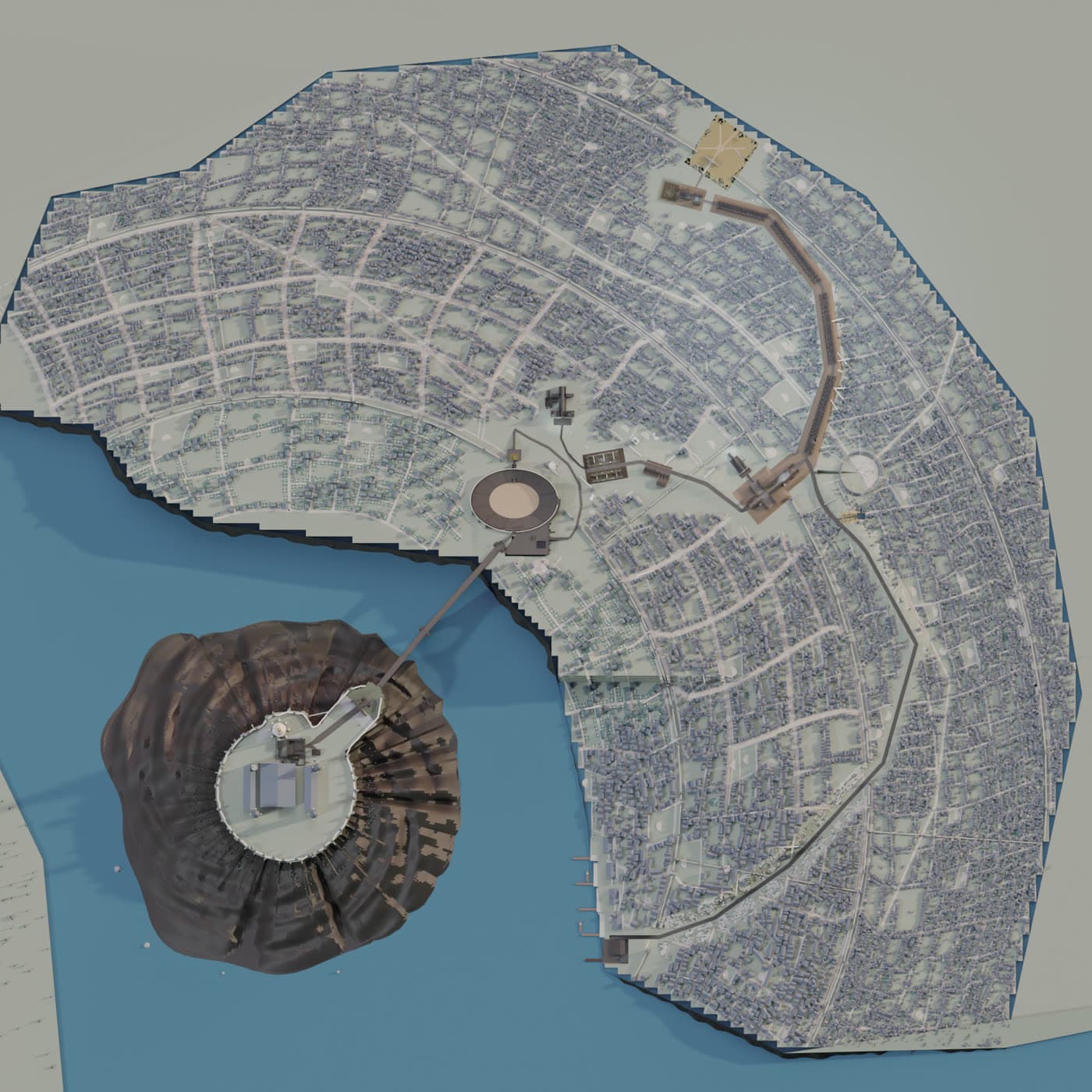
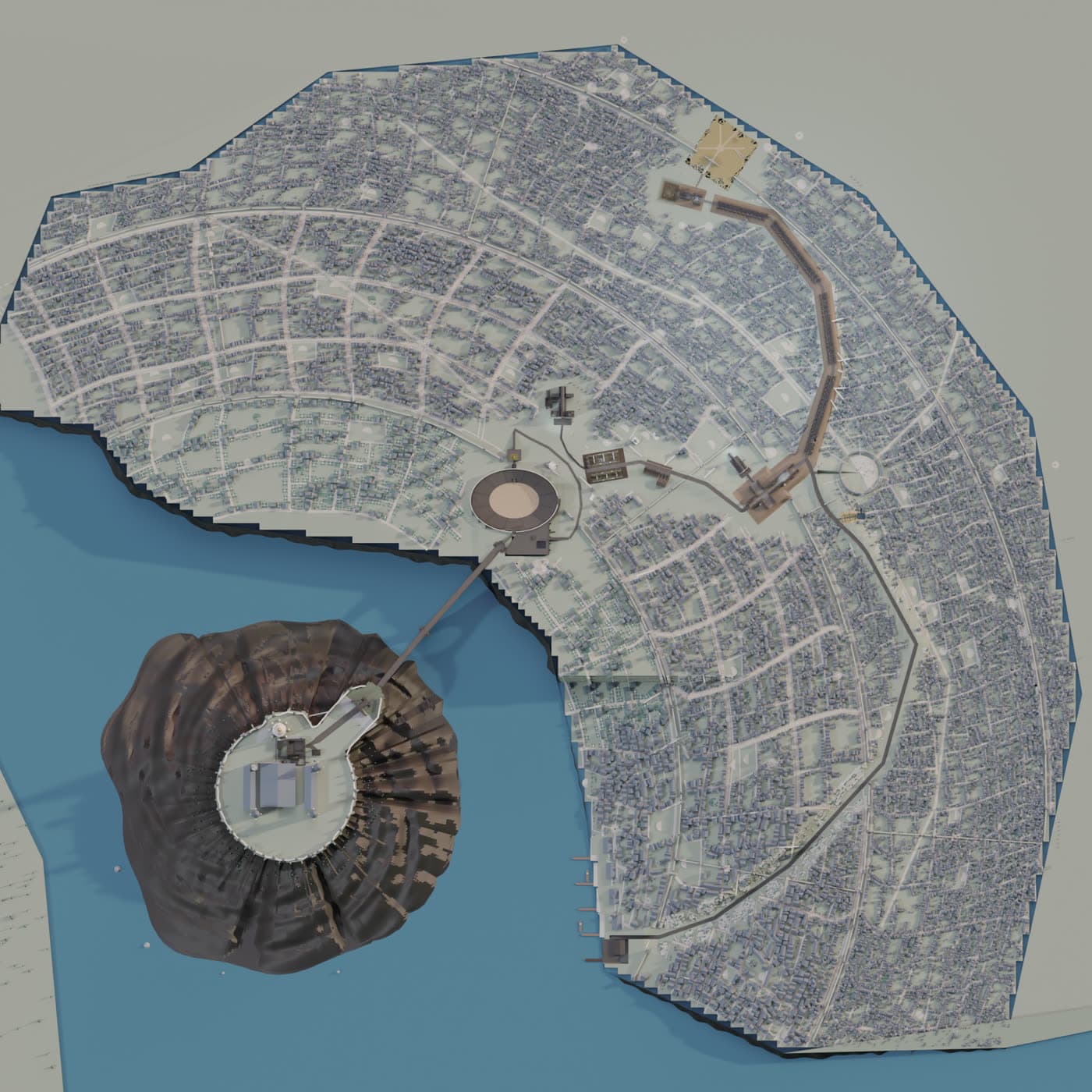
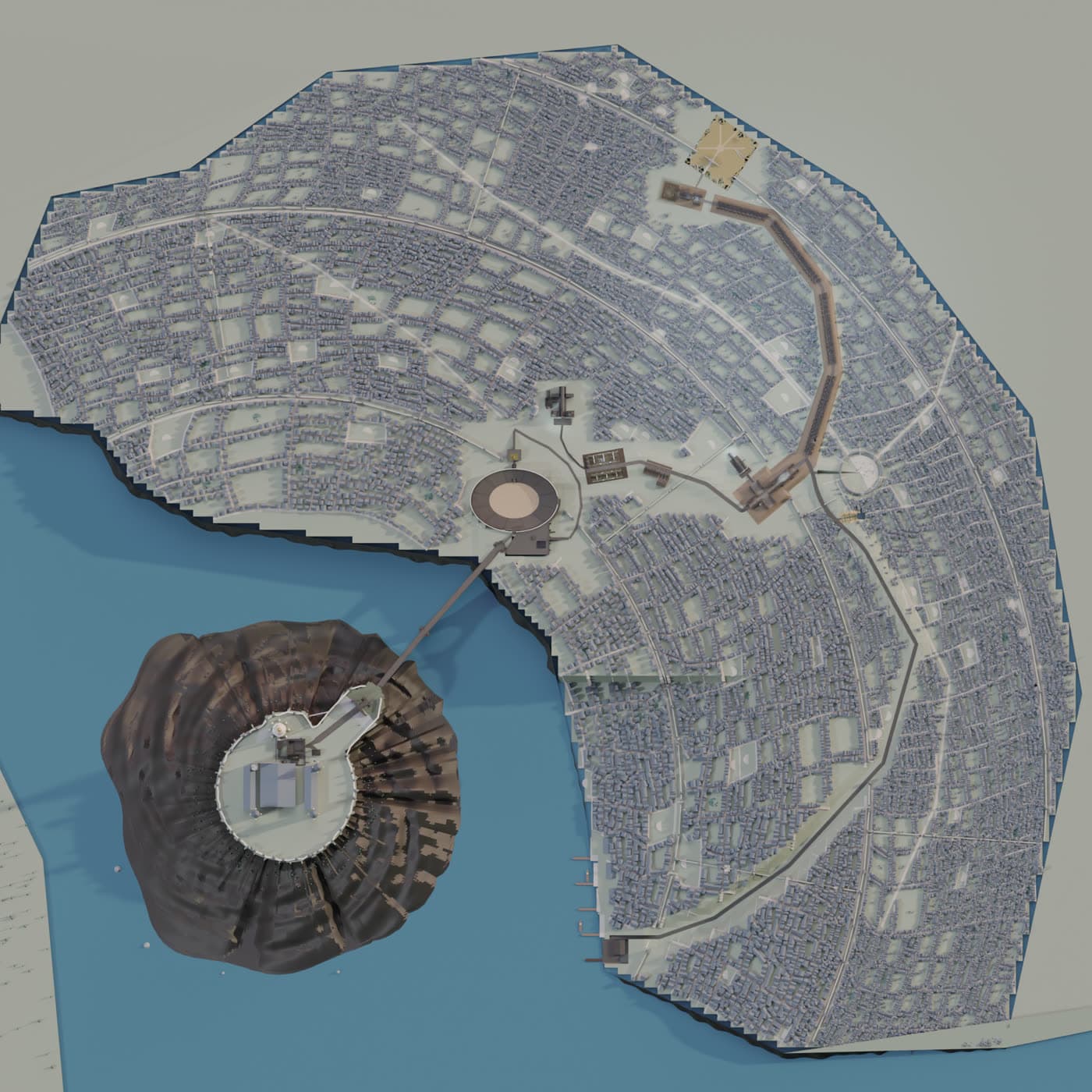
Most of Luna, Lightspire's capital, is now laid out by procedural rules rather than placed by hand. Each rule is tried on a map in about 30 seconds before a full rebuild of about 45 minutes. The Citadel, the arena and other key places are still built by hand, which is why it's most of the city, not all of it. Step through the eight saved stages below, from the placeholder grid to the latest pass.

streets grown by one script, about 210 km
3,329
streets grown by one script, about 210 km
houses placed along them
~31,000
houses placed along them
houses turned into yards by one density rule
8,005
houses turned into yards by one density rule
modular pieces, reused 112,233 times
29
modular pieces, reused 112,233 times
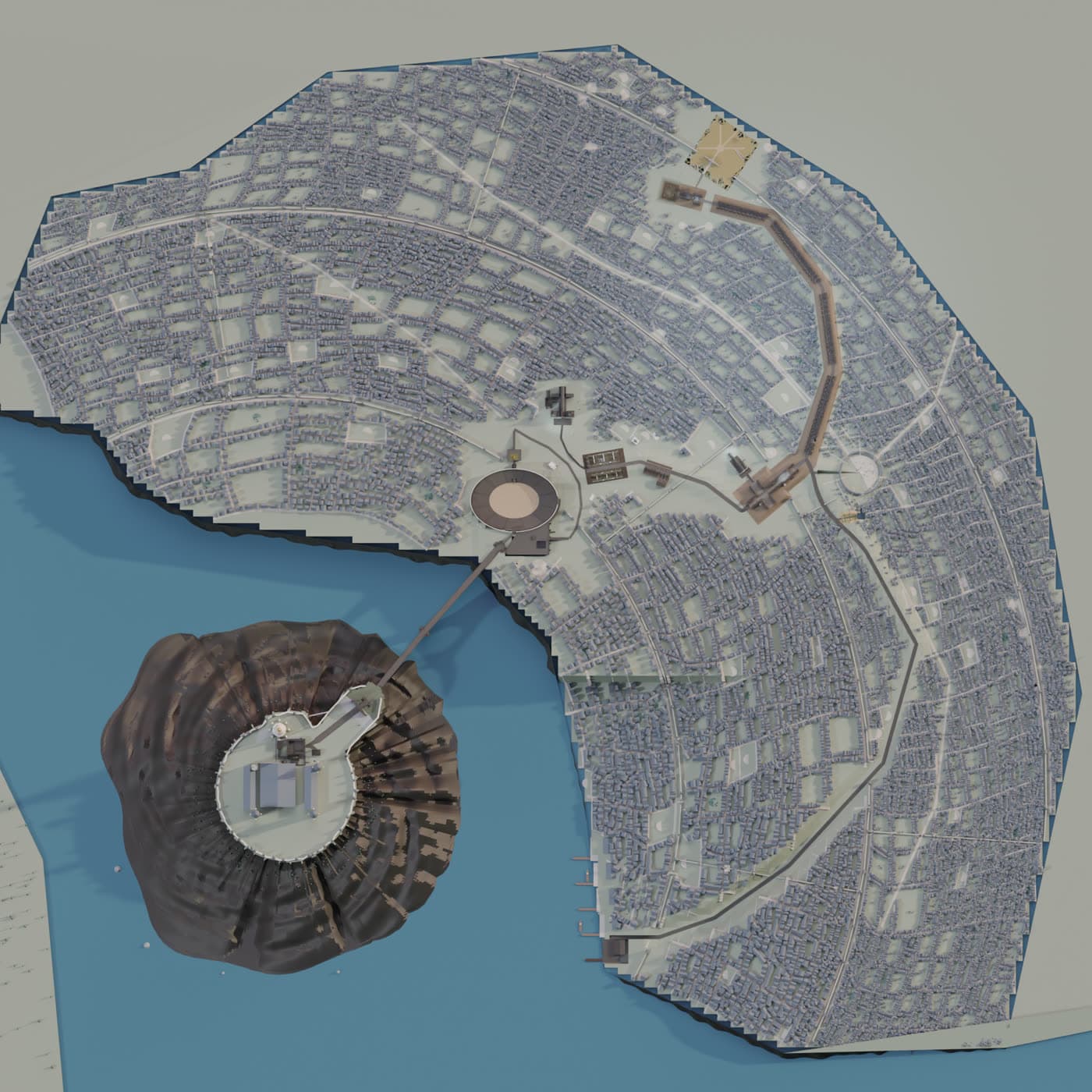
Top-down blockout of Luna as regular blocks of houses on a grid around a bayTop-down blockout of Luna with curving streets and dense houses replacing the gridTop-down blockout of Luna with the Citadel island reshaped into a rocky cragTop-down blockout of Luna with distinct quarters marked among the streetsTop-down blockout of Luna with houses thinned out and open yards between themTop-down blockout of Luna with wards of different density and building sizeTop-down blockout of Luna with stairs and terraces climbing the hillTop-down blockout of Luna with irregular organic blocks, closes and small squares
⇆
Stage 7Stage 8

Drag the picture to compare with the stage before · Blockout, not final art

Stage 8 of 8

Break the grid

The latest pass broke up what was left of the grid with 354 dead-end closes, 1,391 new houses and 37 small squares.

Built by rules, down to the wear

Luna's slums are now built by rules too. Every wall is a seed plus a wear number from 0 to 3: turn it up and the gaps widen, boards go missing, ends snap and the damp line climbs from 35 centimetres to over a metre. Chimney smoke is stacked flat cards leaning downwind, and street-level windows hide a shallow dark room about 70 centimetres deep, because only what the camera can see gets built. Same street, same camera: four days separated the first version from the one we showed on 22 October.

Storyboarding the opening

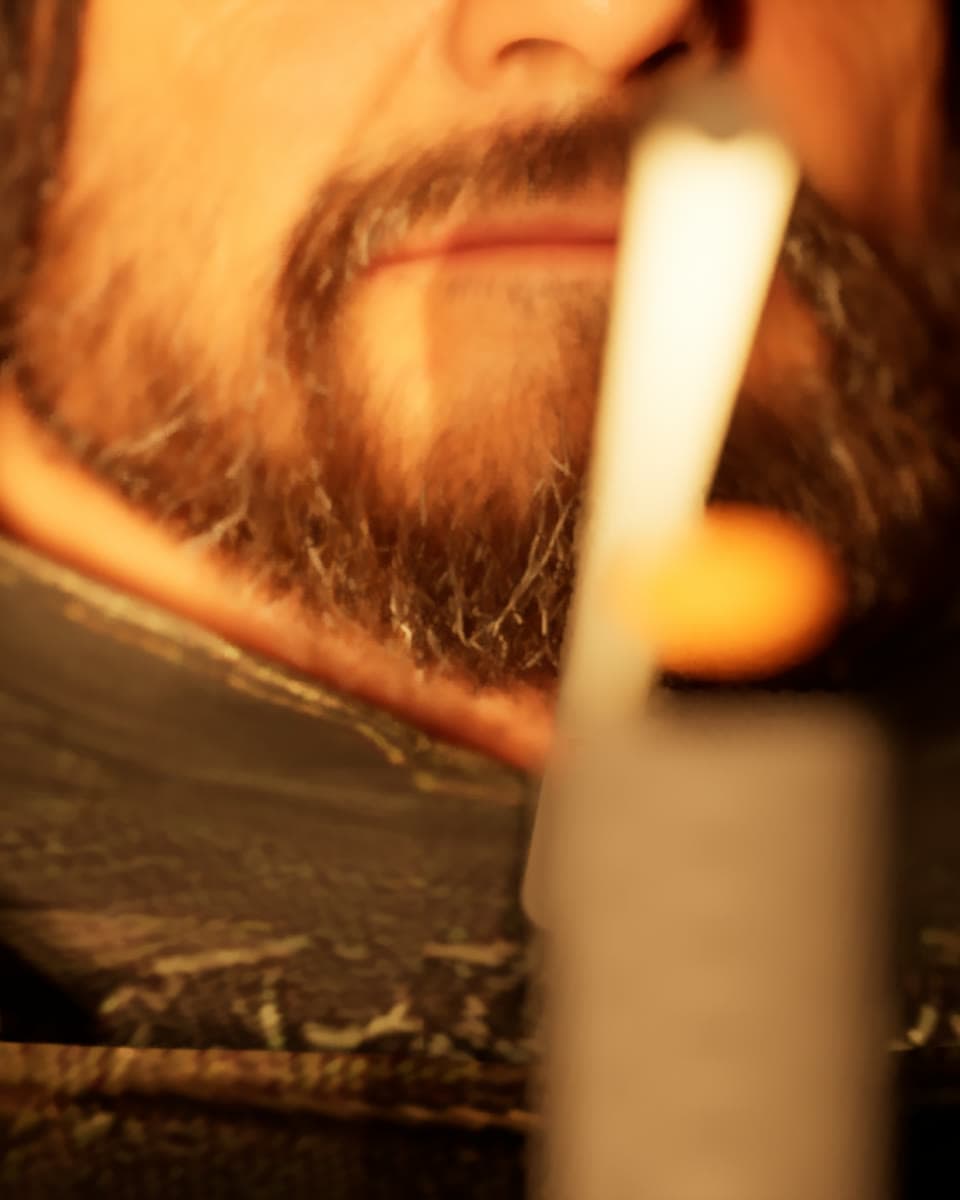
The game opens where the first book does: Fi and Usso mourning a friend in the Dwarven Hearth, with a cold hearth and only lanterns for light. The shot list comes straight from chapter one: black, then the glow of Usso's pipe brightening as he draws, focus pulling through the smoke to Fi, a slow creep up his beard, and a pull back to the empty room. Every shot is rendered from that plan in the engine, so the storyboard is the cutscene. Since then the Hearth has had its full lighting pass, and the characters are next.
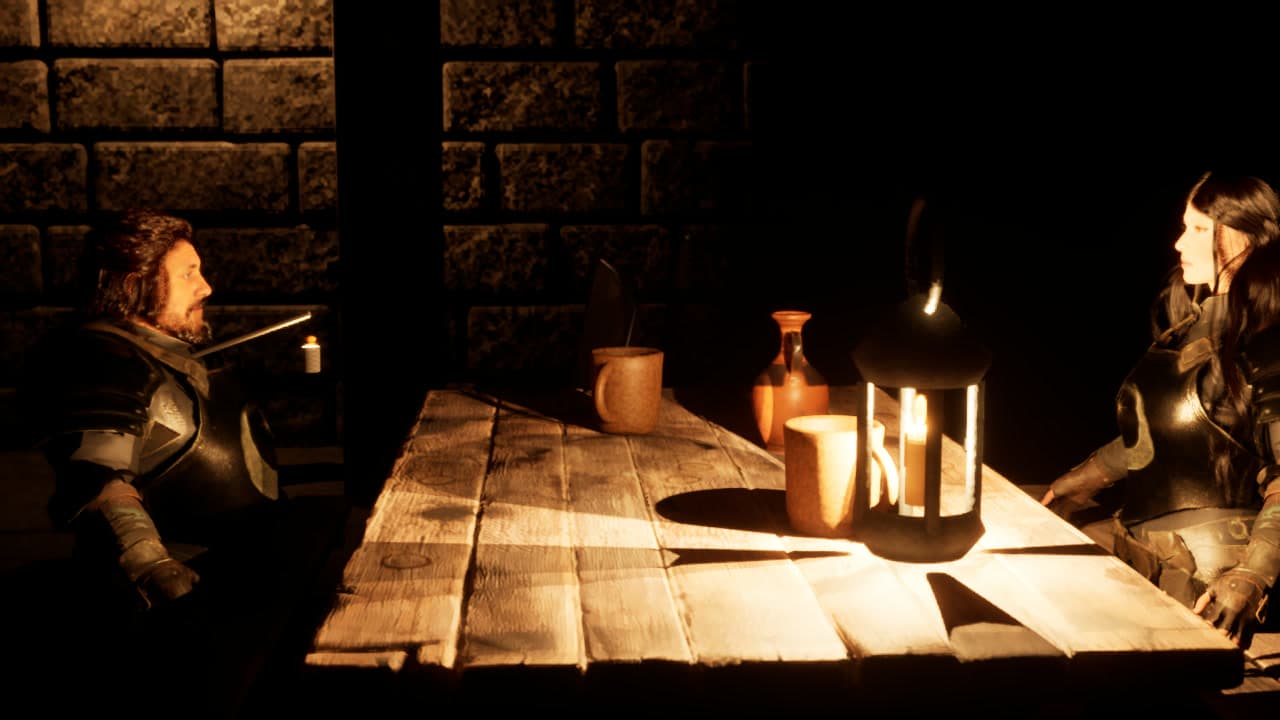

Two figures at a lantern-lit tavern table in a dark, empty stone room
Shot 6 · Pull back to the wide
A glowing pipe ember in close-up against darkness
Shot 2 · The pipe
A dark-haired woman out of focus beyond drifting smoke
Shot 4 · Rack focus to Fi
A close-up of a bearded face lit warmly by a pipe ember
Shot 5 · Up Usso's beard

Usso's face, from a phone video

The first face-capture test turned a single phone video of our own performance into Usso's expressions in Unreal Engine, head turns included. It's a test on a plain background rather than the finished cutscene, but it's how Fi and Usso will be performed.
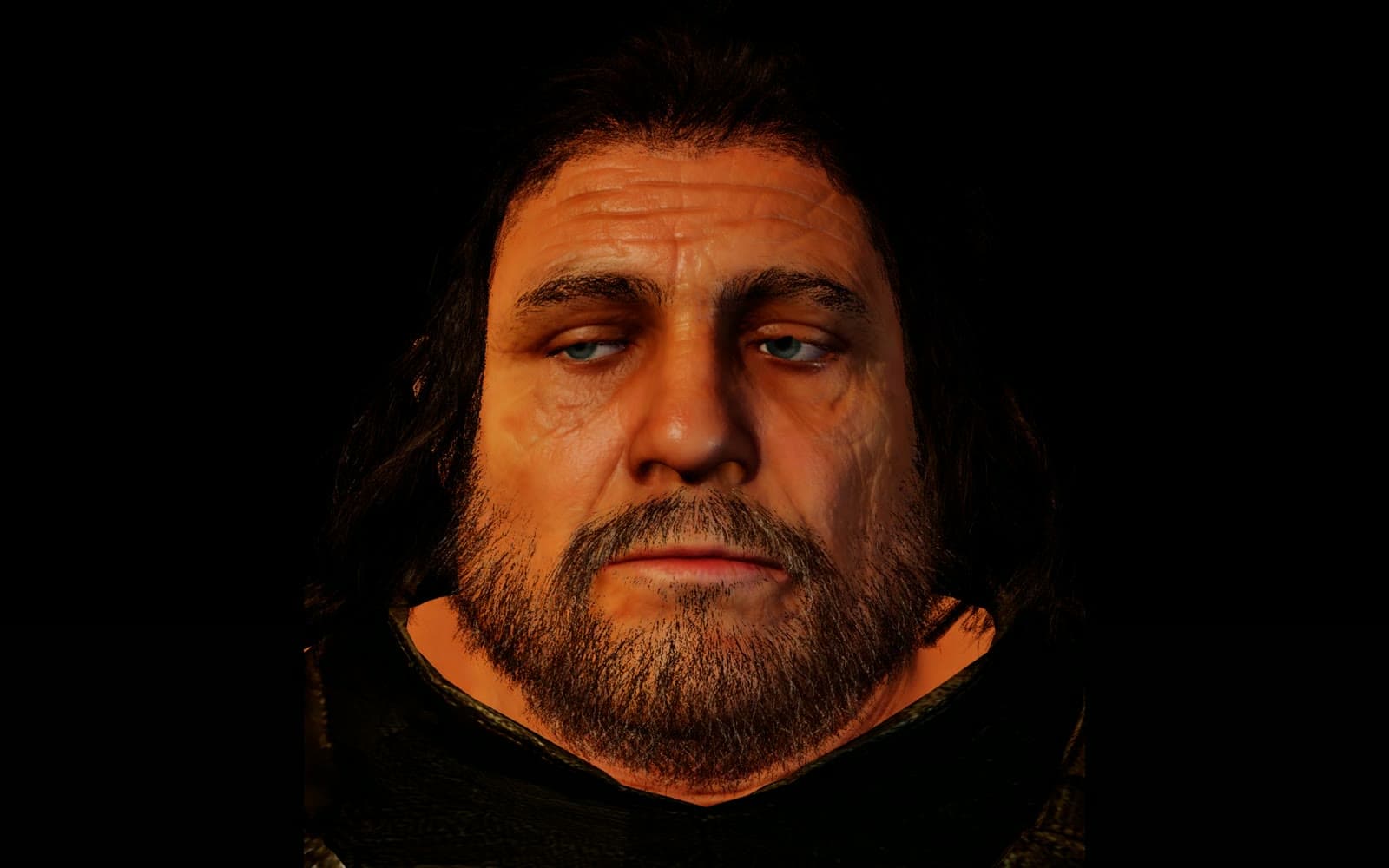
Close-up of Usso, a bearded, long-haired man in dark armour, with a weary expression
Face capture test · Usso

Weather and the hour of day

A first pass at a time-of-day system sets the sun, moon, sky and fog from a clock and a weather preset, so the same street can be shot at dawn, midday or midnight, in mist or drizzle. Around it, the world has started reacting: hanging cloth sways in the wind, and pots, jugs, barrels and crates in the opening streets break apart under a sword swing or a roll.
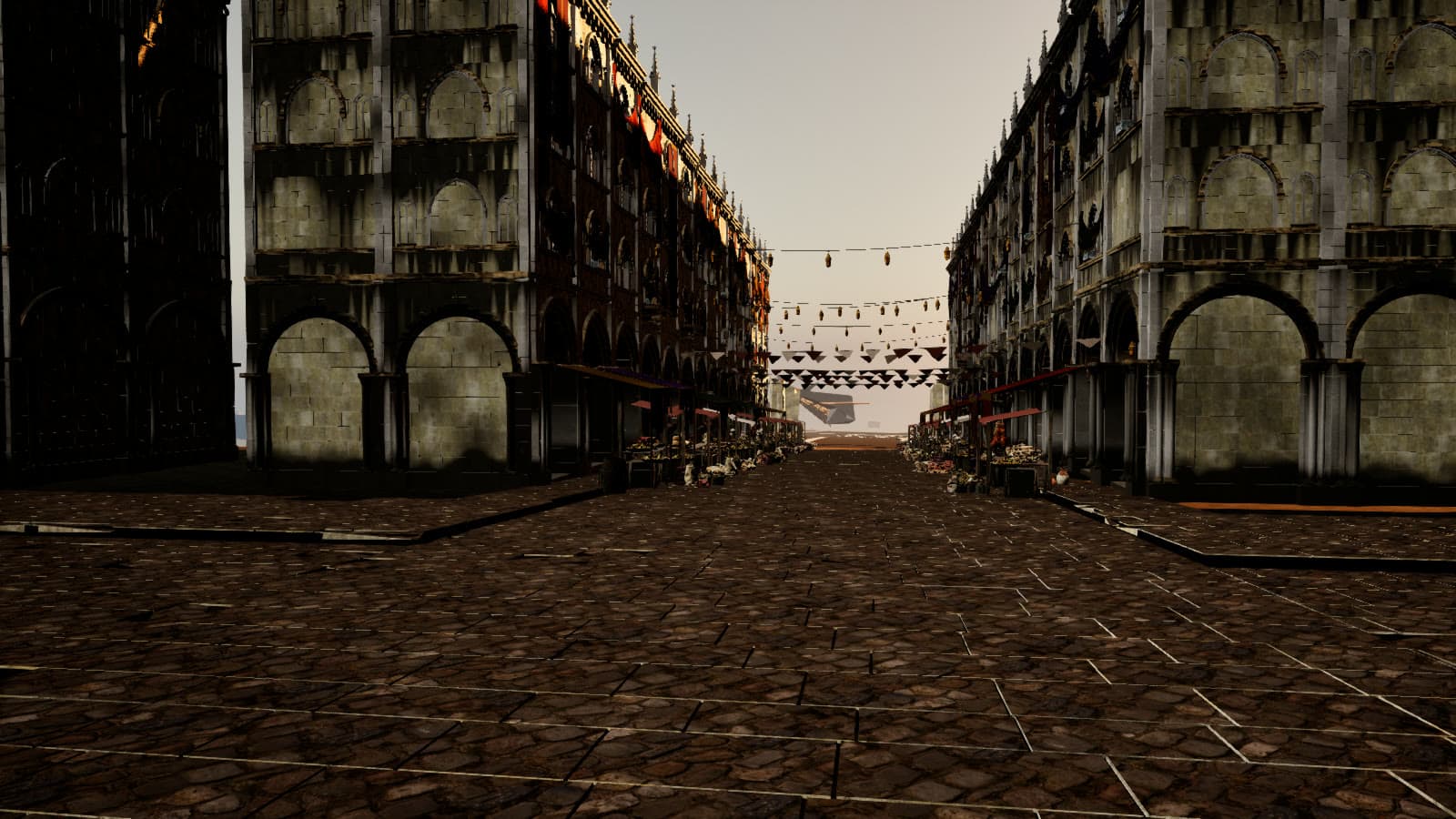
The same trade market street at night, lit by lanterns and stalls
The trade market street by overcast daylight
⇆
DayNight
Drag across the picture to compare · Work in progress, not final art

Stone that has seen rain

The first stone market looked brand new, with one texture on everything. The building kit now gives each part of a facade its own stone, from five stone scans, and writes the rain into its rules: run-off streaks hang under every sill, cornice and arch, and damp creeps up about a metre from the street. Every piece is generated, so no two bays match.
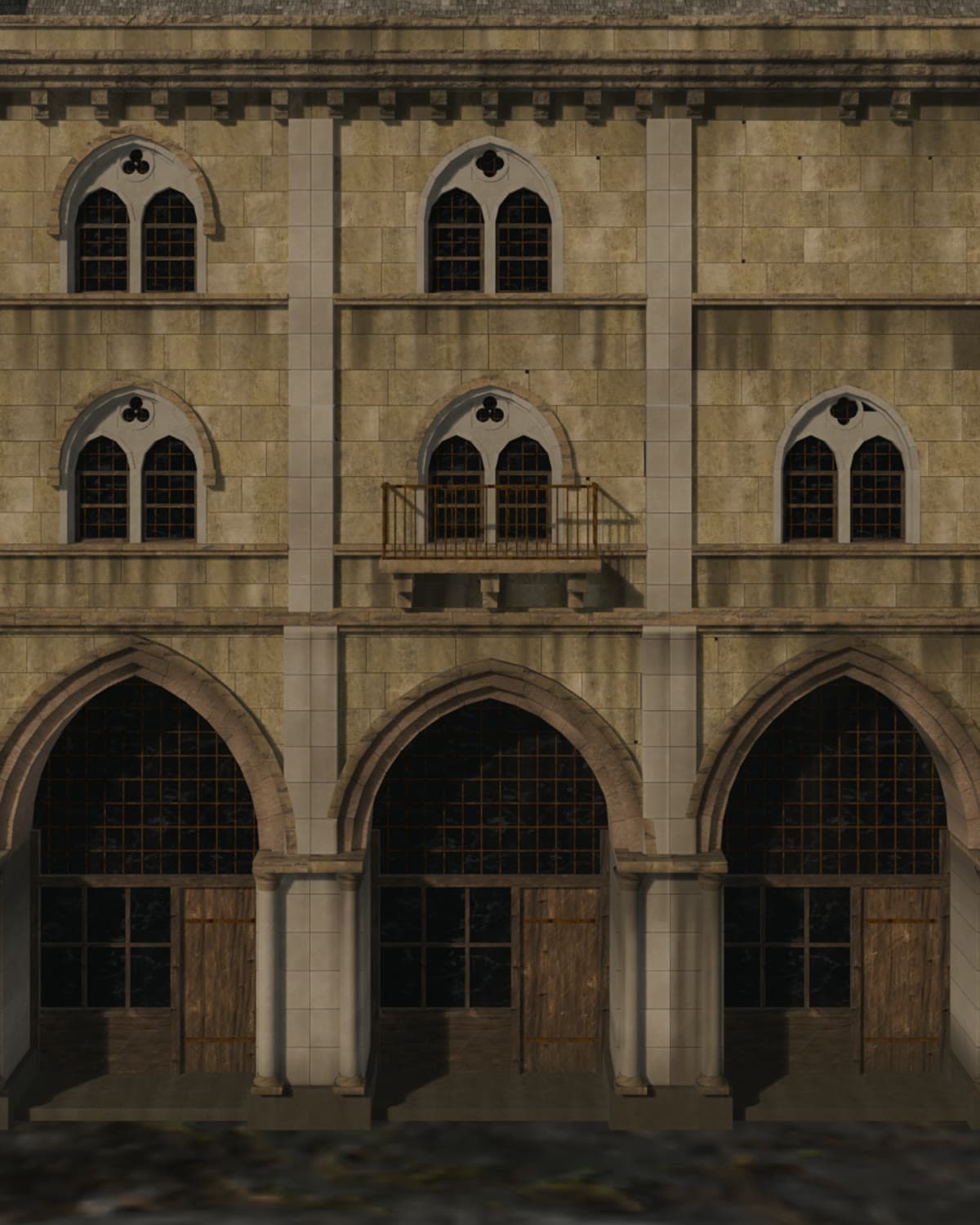
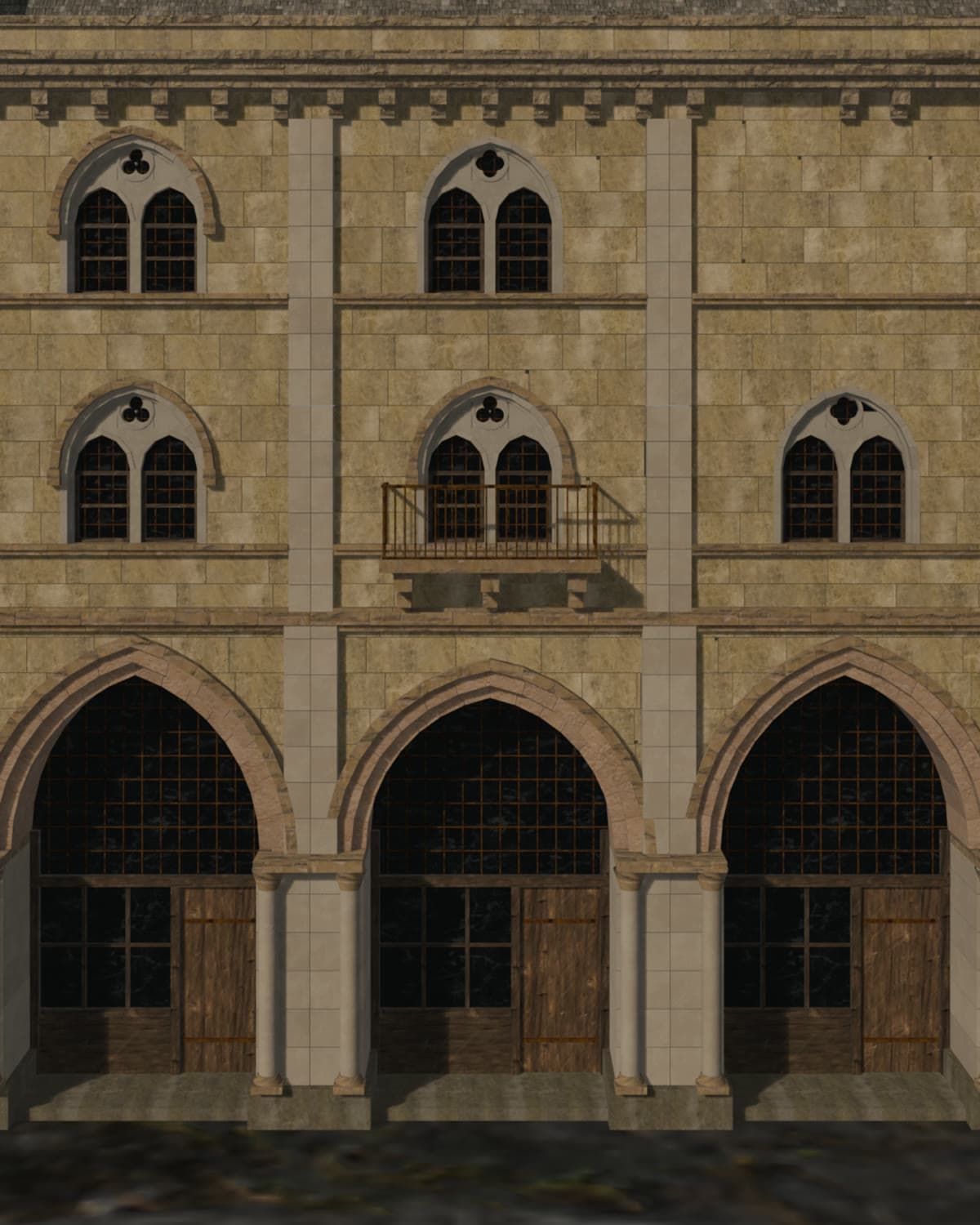
The same facade with dark rain streaks under the ledges and damp at its base
A clean stone market facade with pointed arches and arched windows
⇆
CleanWeathered
Drag across the picture to compare · Work in progress, not final art

Every race now loads

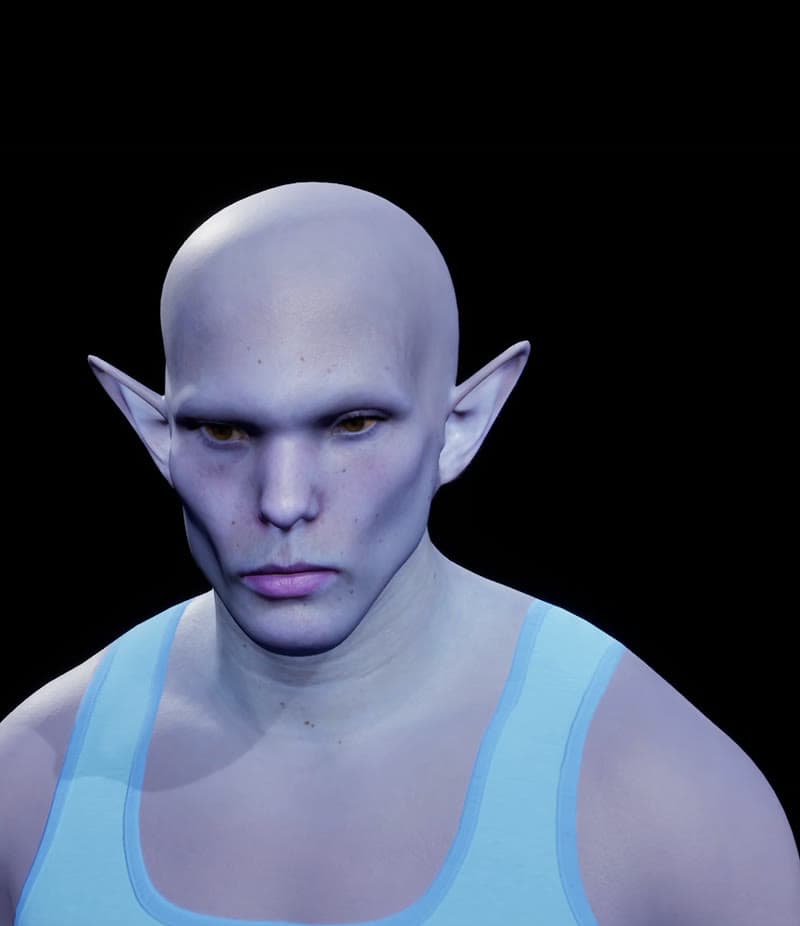
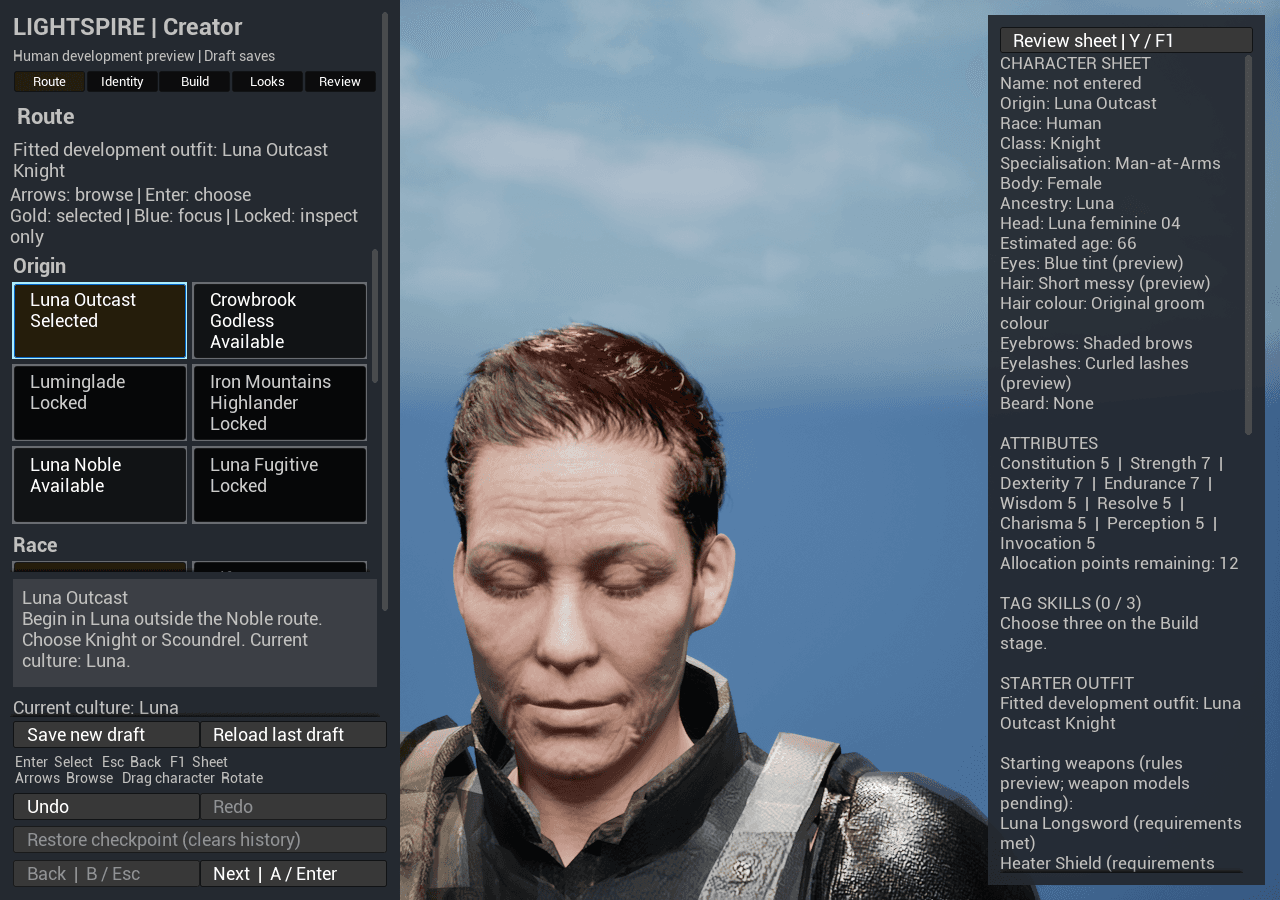
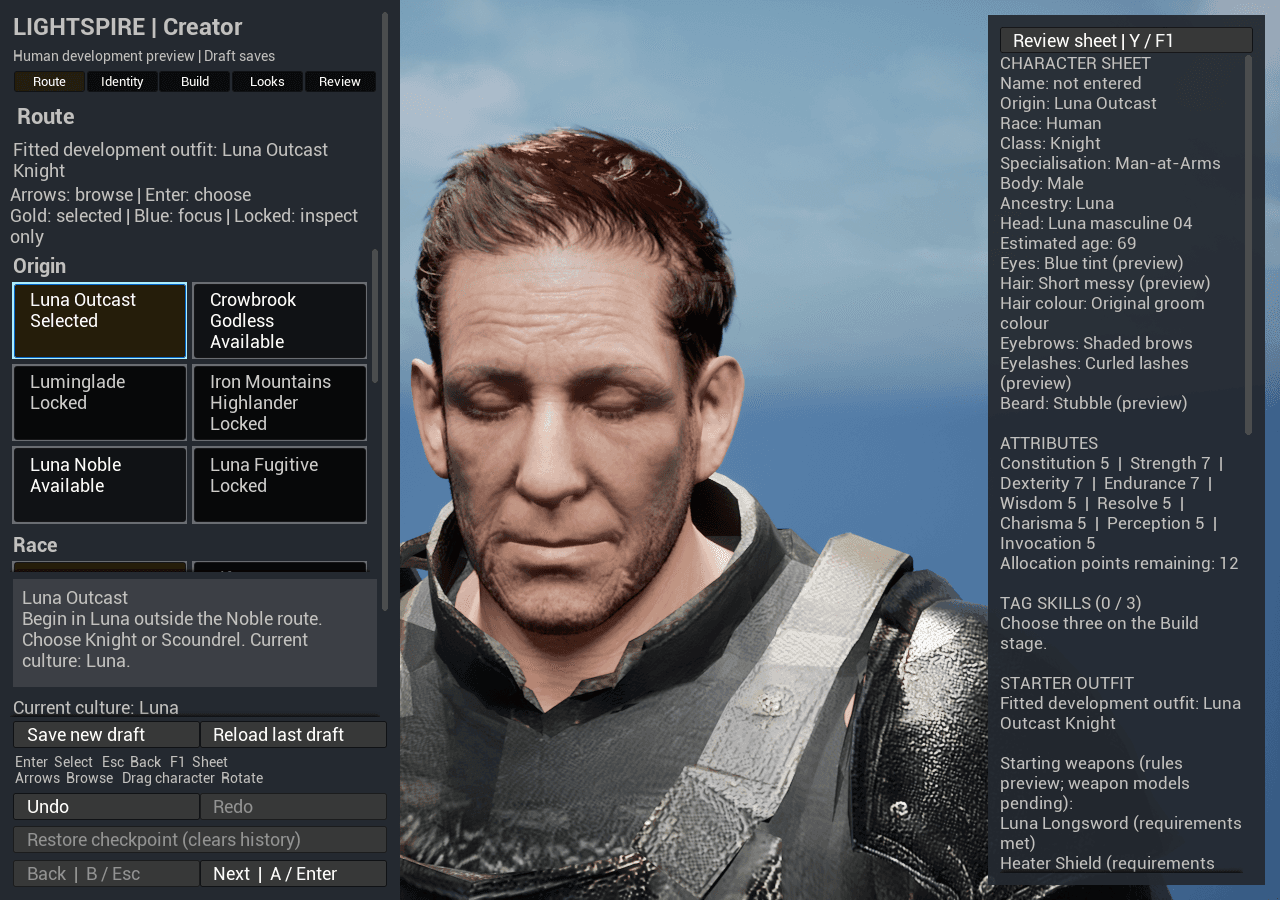
The character creator has had its first full play test with every playable race loaded: Human, Elf, Dwarf, Highlander and Fae. The catalogue holds 127 heads, each available on 25 body shapes, across lineages such as Luna and the Sunward Reach, the Fae of Luminglade and the Elves of Luna's old houses. Since then every head has been given its own skin, every Dwarf head has been refitted, and faces now blink while idle. Hair, skin tones and some head shapes are still being worked on. Ancestry decides where your family comes from, never your faith, class or allegiance.
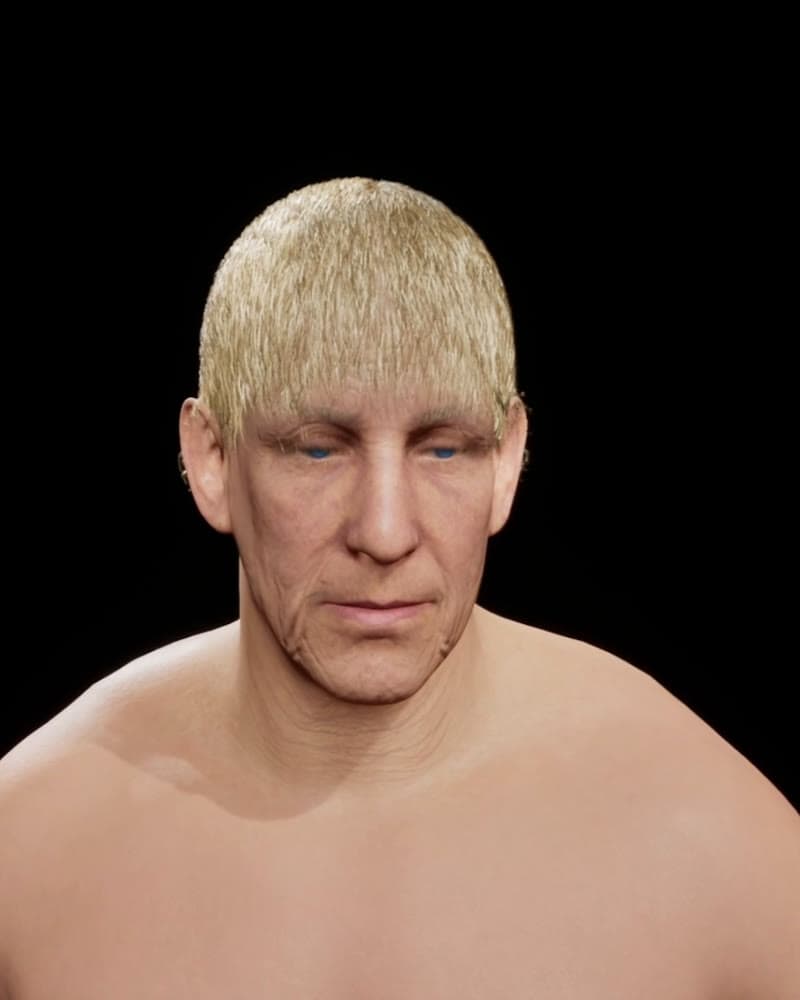
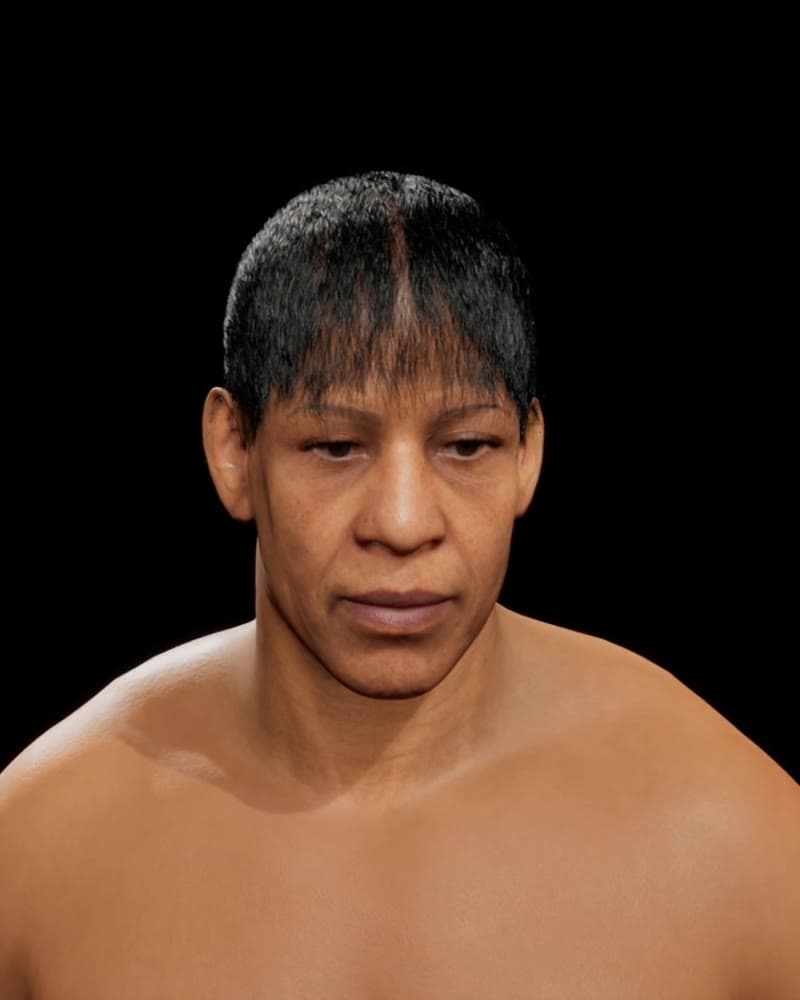
A fair-haired Human head with weathered skin in the character creator
Human · Luna
A dark-haired Human head with warm brown skin in the character creator
Human · Sunward Reach
A bald Fae with long pointed ears and pale lilac skin in the character creator
Fae · Luminglade

Feelings worn on the skin

Every Fae in Lightspire wears their feelings on their skin. Calm, their element barely shows; as emotion rises, so does the element. One value drives skin, hair and particles across all four Houses, Phoenix, Kraken, Gorgon and Sylph, and it now works on every Fae head in the character creator.

Lightspire: Cards is out in Early Access

The free Lightspire: Cards demo ran through Steam Next Fest from 19 to 26 October, and on 27 October the full game launched in Early Access on Steam, with its 31-chapter campaign drawn from the books, Skirmish and multiplayer. Before launch, saves gained backup recovery, battle rewards can no longer be lost or doubled, and the tutorial got a clearer way in. Early Access means the game keeps growing with player feedback.
Lightspire: Cards key art with the game's logo
Lightspire: Cards · Out now in Early Access

The books behind the game

Books 3 and 4, The Highlander and The Godless Priest, had their biggest revision yet. A continuity pass checked both against each other and against the published books, scenes that had been drafted more than once were cut down to a single telling, and work began on a shared in-world calendar, so all four books agree on where everyone is, and when. The Highlander came out about a fifth shorter, and tighter for it.

A wiki and a family tree for the whole saga

The website gained a Lightspire wiki: 223 pages on characters, places, faiths, history and races, plus the RPG's classes and weapons, with a spoiler tick for each book. The family tree was rebuilt to hold all 116 characters across the four books, before and after the story, with a new layout that keeps every couple's children beneath them. Lightspire accounts can also now sign in with Google, Microsoft, Apple or Steam.

The mocap series found an audience

Our short videos on filming combat with two cheap cameras travelled much further than we expected. The explainer on how two cameras see in 3D has now reached nearly 400,000 accounts on Instagram. The follow-up tested the method against an animation we already had, and with two cameras the result lands about five centimetres off on average. Since then a new post has gone out almost every day, from city rules to the books. More of the series is on our channels.

accounts reached by one explainer
395,963
accounts reached by one explainer
views of it on Instagram
586,990
views of it on Instagram
Instagram followers across October
46 → 755
Instagram followers across October
average error with two cameras
5.1 cm
average error with two cameras

Next on the bench

  • →Finish a kit for every location, then light the whole world in one pass.
  • →Bring the opening's animation and performances up to the new locations.
  • →Swap the remaining stand-in characters for their real versions.
  • →Finish hair, skin tones and loading in the character creator.
  • →Keep improving Lightspire: Cards through Early Access.
Earlier updates

October 2026Combat, movement and the first rooms

September's second half moved the RPG beyond the character creator. The first weapon prototypes are playable, combat animation is now being filmed from our own performances, and the first environment studies are turning into rooms a character can walk into.

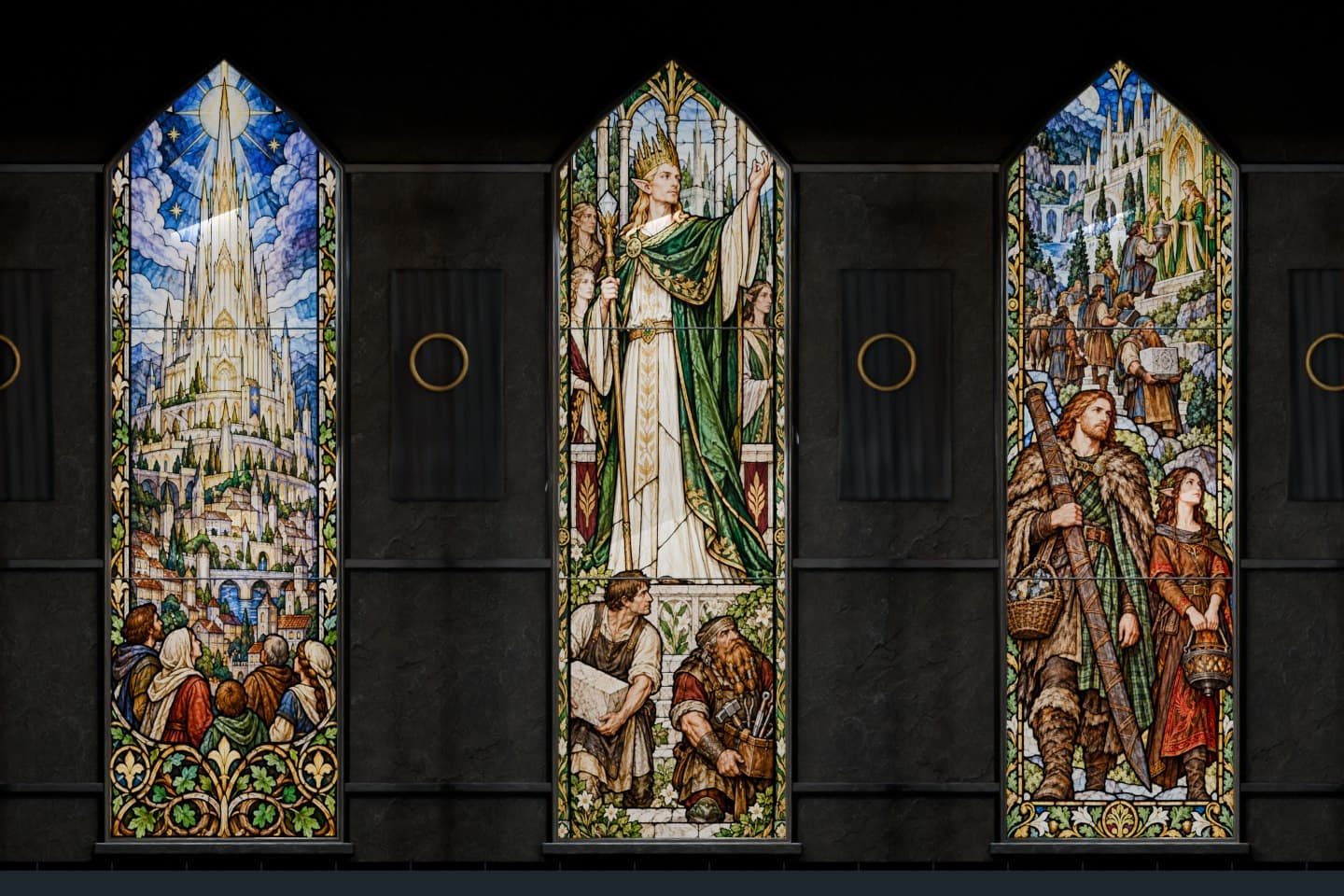
Three illustrated stained-glass windows glowing in a dark stone hall
Environment study · Illustrated stained glass

Filming our own combat moves

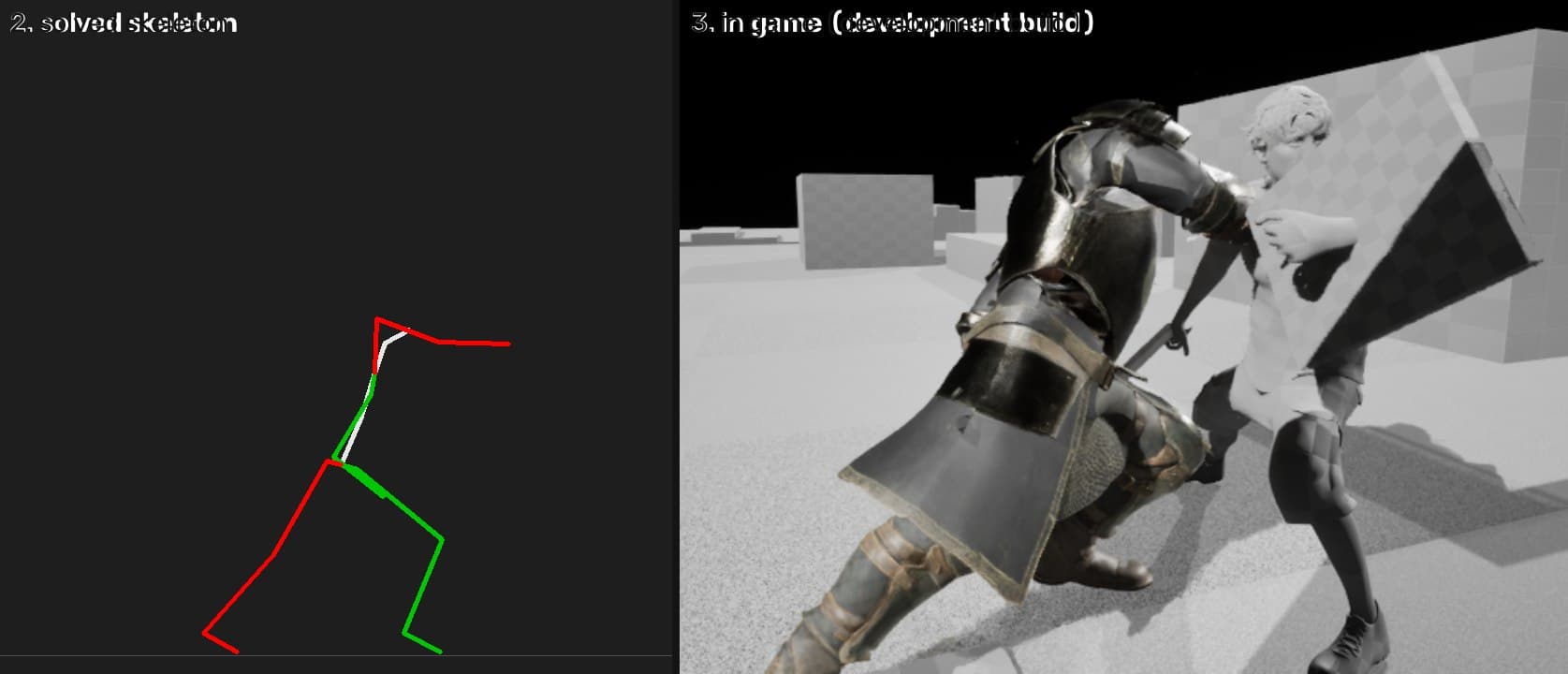
A three-hit dagger combo was filmed at home on a phone and a laptop webcam, tracked with open-source tools, solved onto the game skeleton and played in the development build. Along the way we fixed a backwards-bending elbow, a character that grew taller mid-combo and sliding feet, then added blade trails and hit-stop.

A solved stick-figure skeleton beside the armoured game character performing the same dagger strike
Solved skeleton → development build

Three weapon families to practise with

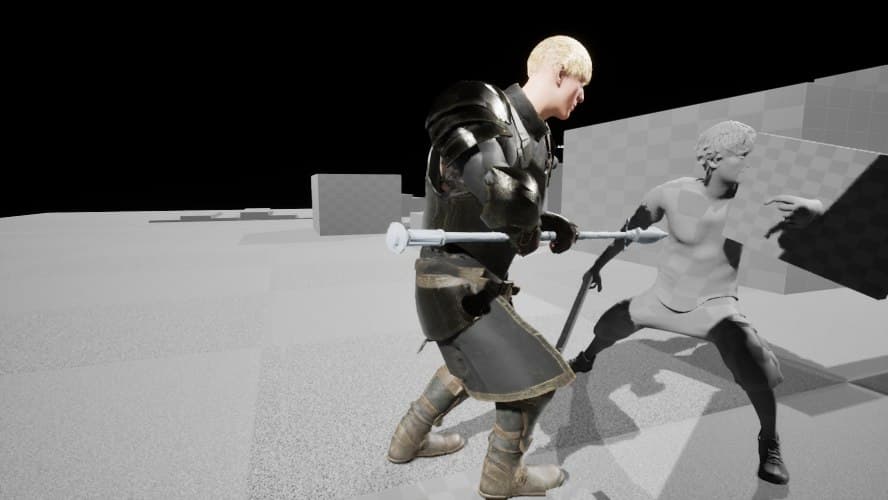
Sword and shield, spear and knife each have their own two-hit sequences. A sparring opponent can approach, guard, telegraph a swing and lose its guard when its Stamina runs out, and verified hits award experience to the weapon family you used.

An armoured character holding a spear facing a sparring target in a grey development arena
Spear prototype · Development arena

Movement with weight

A traversal course now shares Endurance-based Stamina across sprinting, jumping and a rough first roll. Body composition and equipped load feed into movement separately, so what you build and what you wear both matter.

The first starter room

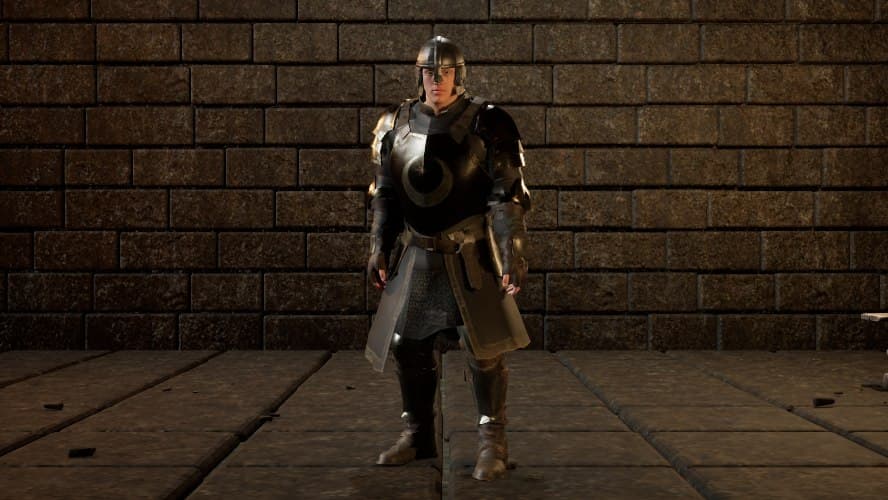
The Dwarven Hearth tavern was built in Blender, packaged for the engine and connected to the character creator. A new character can step into the room, climb its stairs, and a saved draft resumes right where it was left.

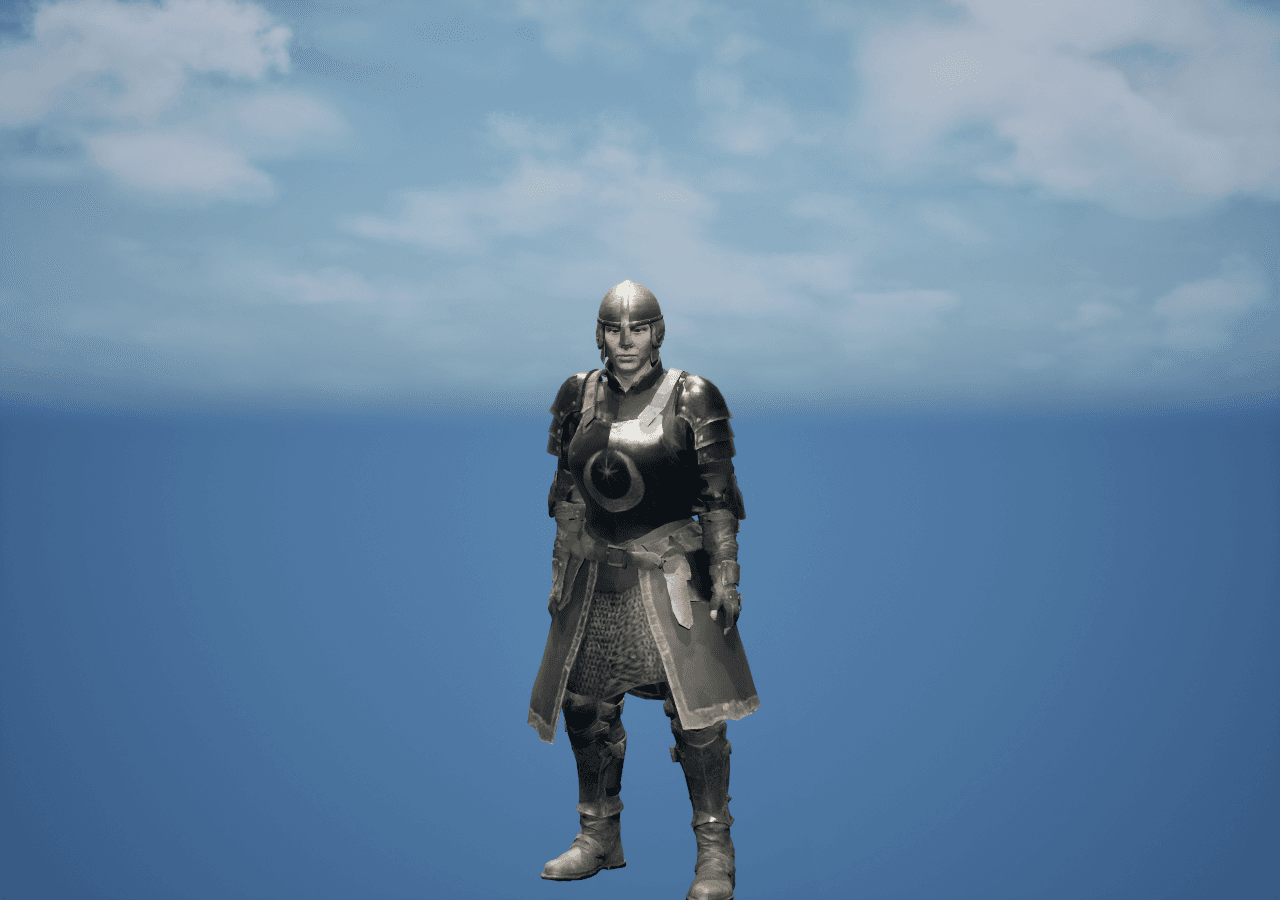
An armoured development character standing on a timber floor in front of a stone wall
Hearth room · Creator to play

Environment studies

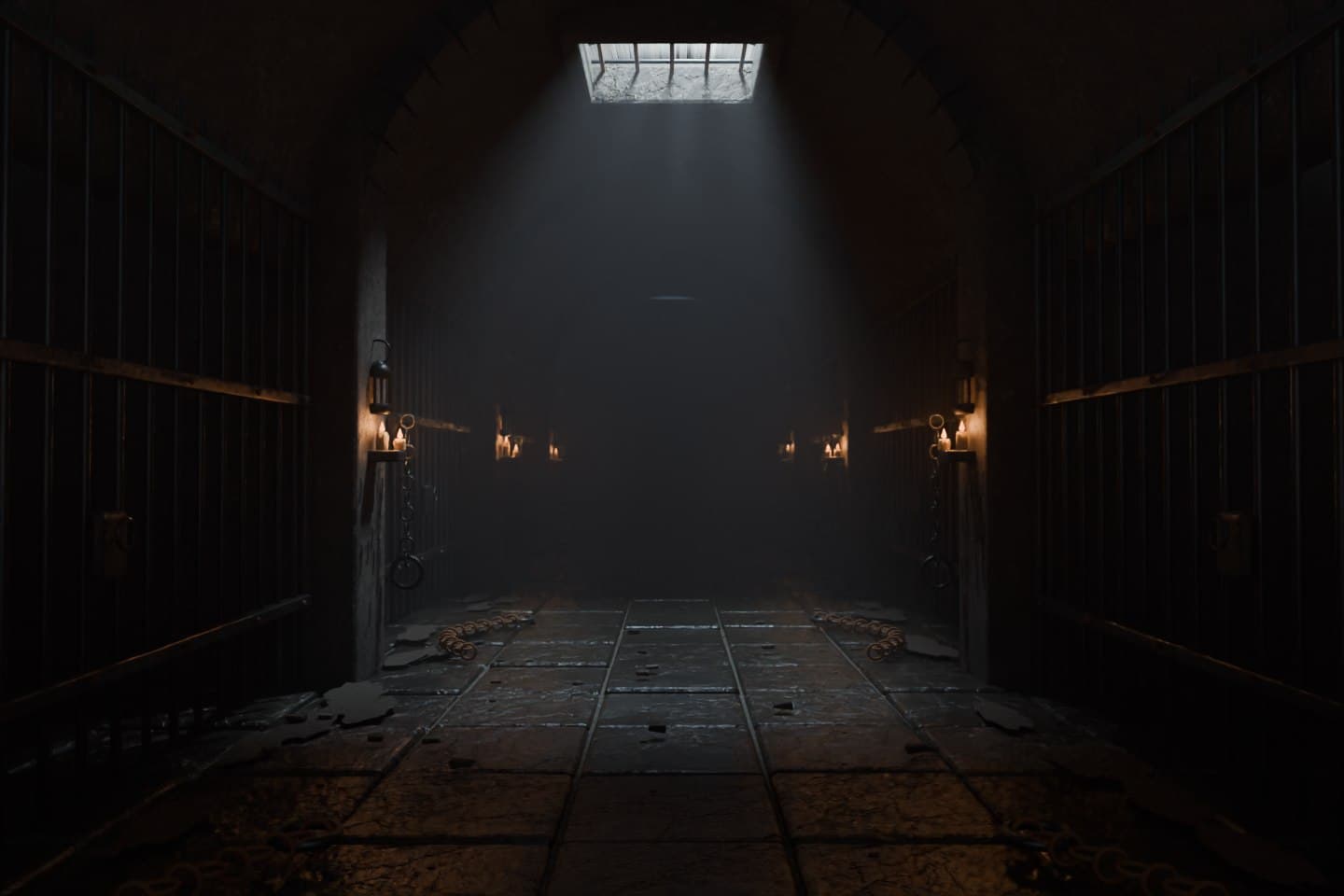
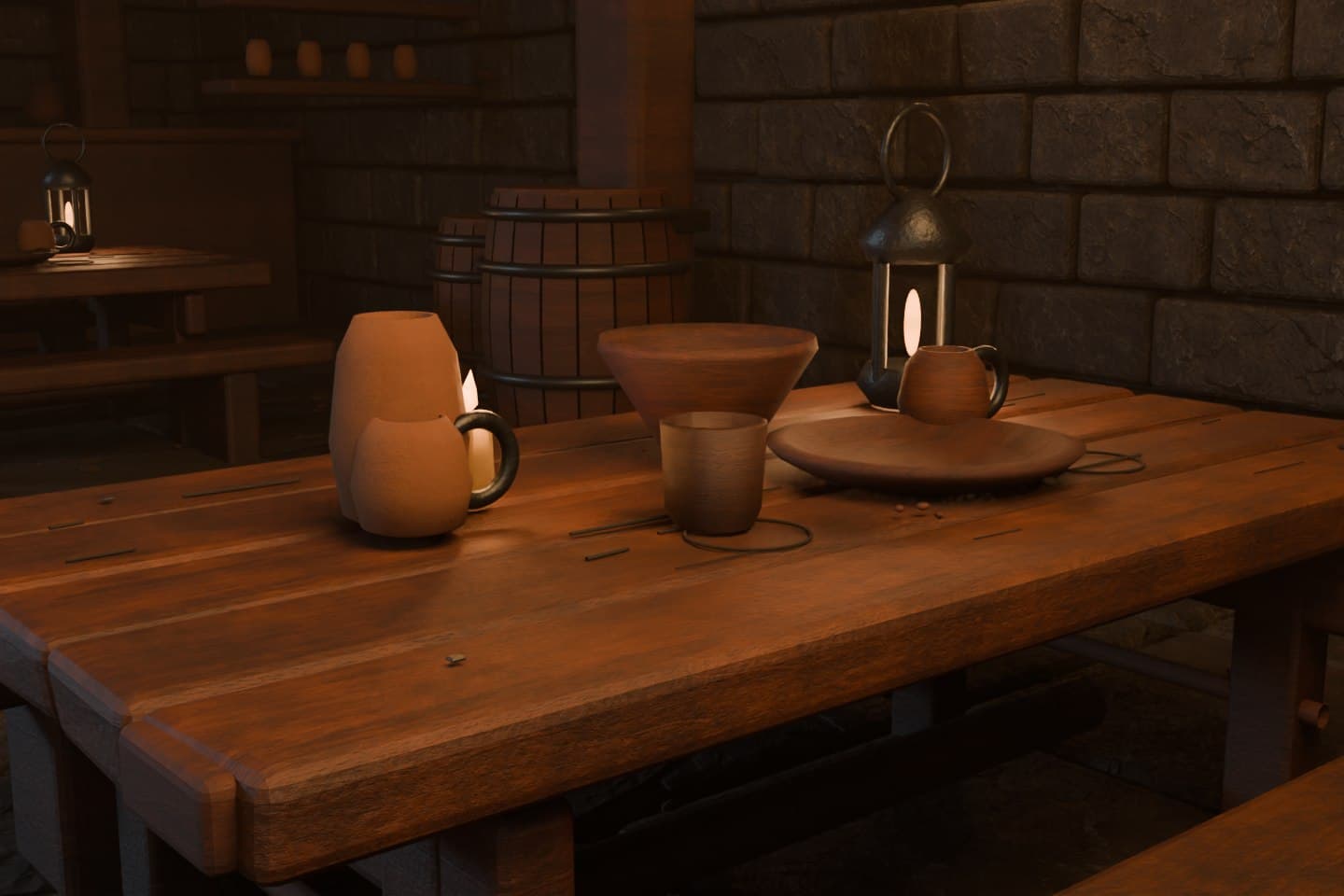
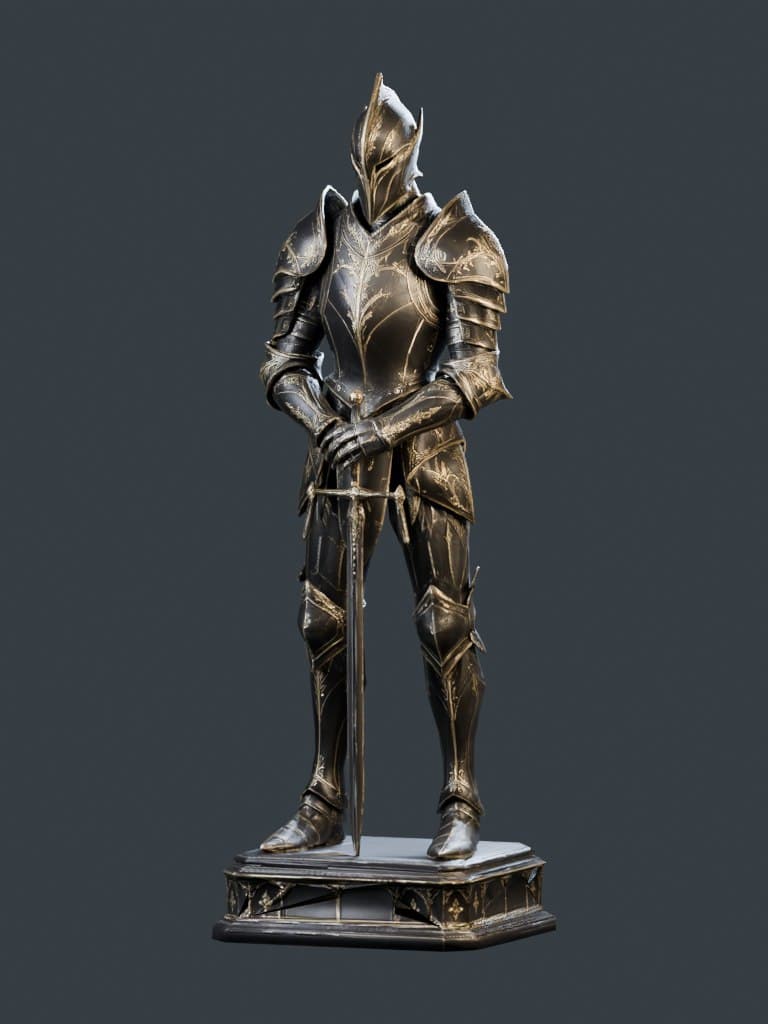
Tavern, dungeon and castle studies explored wear, cloth, candlelight and scale, and book-led stained glass puts Lightspire's history into the architecture. These are art direction studies, not final levels.

A dark stone dungeon corridor with barred cells, candles and light falling through a ceiling grate
Dungeon study
A lantern-lit wooden tavern table with rough cups, a bowl and a platter
Tavern craft pass
A blackened steel ceremonial suit of armour with gold ornament on a plinth
Castle prop · Ceremonial armour

The character catalogue widens

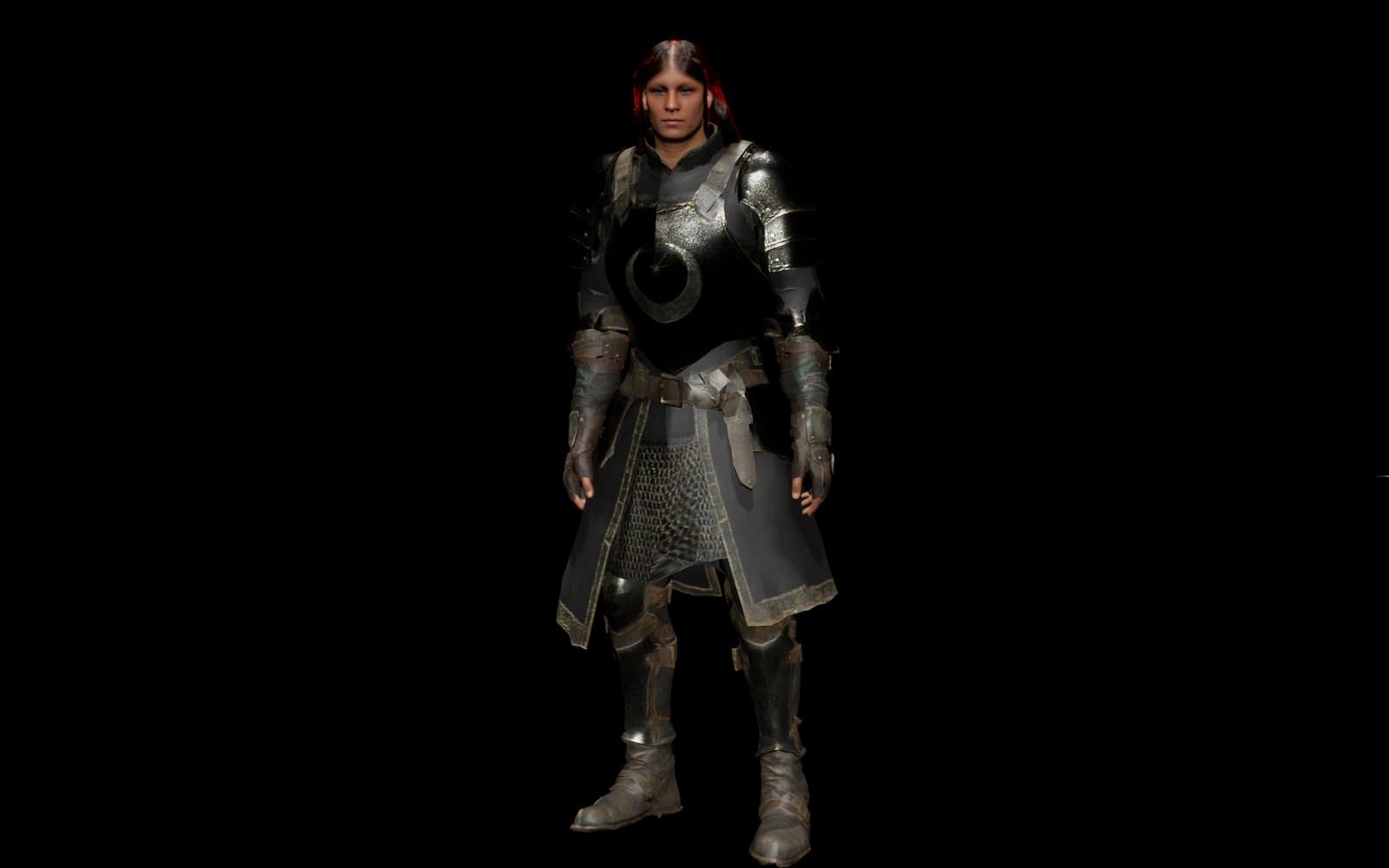
Elf, Dwarf, Highlander and Fae heads are joining the Human set, and every planned physique state is now registered in the development catalogue. Highlanders cover 25 physique combinations per body base, and hair now holds steady through edits, undo and reload.

A full-length Highlander character in weathered armour against a black background
Highlander · Physique range

Next on the bench

  • →Fill the remaining Elf, Dwarf, Highlander and Fae head seats.
  • →Film and solve more weapon performances beyond the dagger.
  • →Bring more environment studies into the engine as playable rooms.
  • →Visual review of the creator, combat and movement in play.
September 2026The character creator's first complete loop

The first major RPG foundation came together as one connected system: identity, ancestry, appearance, wardrobe, movement, saving and the handoff into an origin opening, first proven on a full set of Human characters.

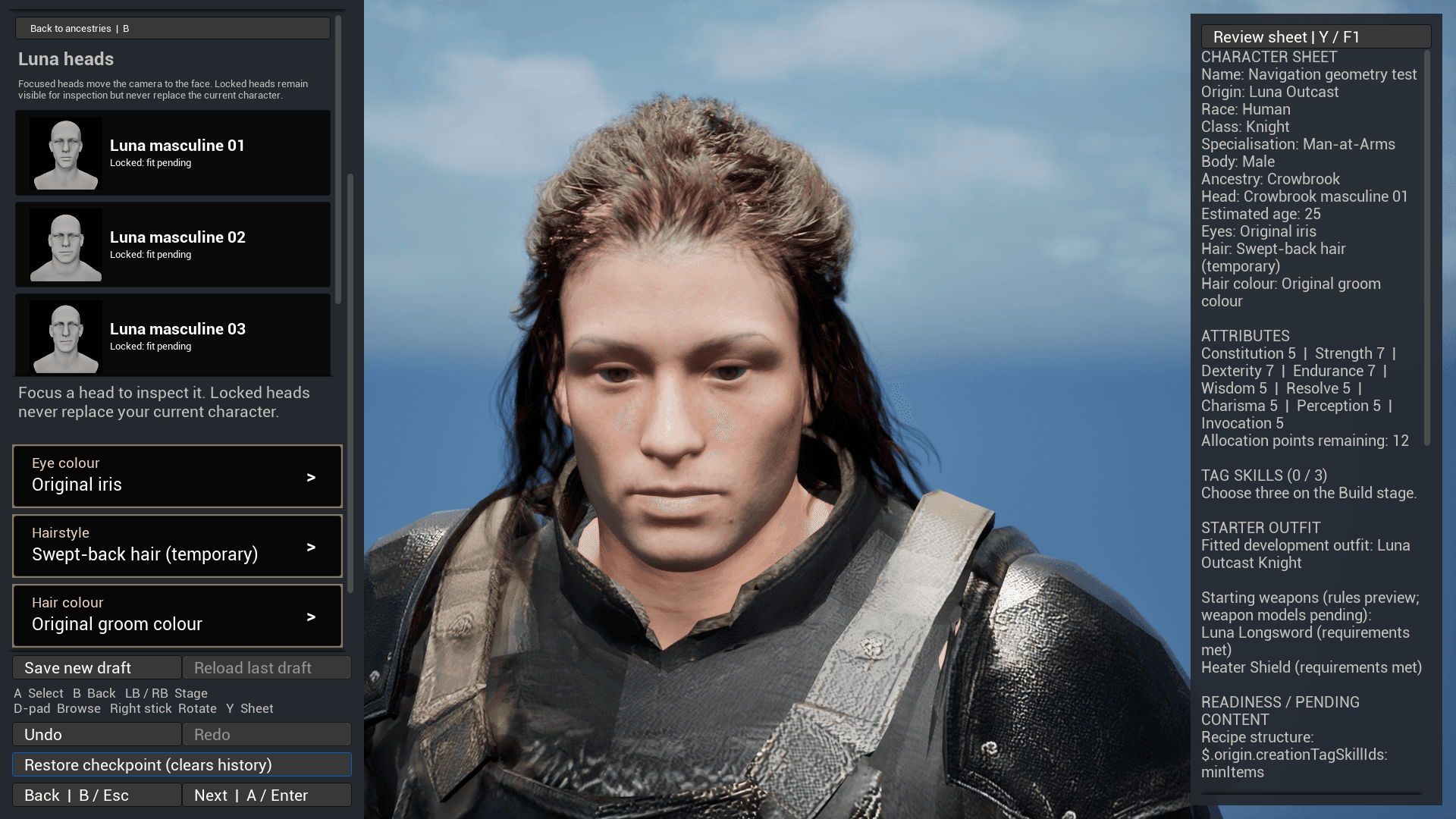
Work-in-progress creator interface with character and customisation controls
Creator interface · Development build

Human faces and body bases

Ancestry-aware Human face presets with masculine and feminine body bases, plus hair, iris and pigment choices with defaults that respond to ancestry.

Work-in-progress feminine Human face preset
Human face study · Feminine
Work-in-progress masculine Human face preset
Human face study · Masculine
Work-in-progress armoured character movement and equipment test
Movement and wardrobe proof

A loop, not a set of sliders

Draft save, appearance change and exact reload; keyboard, mouse and controller navigation; and origin preview, start, return and saved handoff all work in the development build.

Next on the bench

  • →Admit non-Human bodies, wardrobe and headwear.
  • →Armour contact, lighting and art direction passes.
  • →Physical-controller feel and packaged-build review.

Under the surface

Six systems, one identity.

A convincing character creator is not only about faces. The character has to remain coherent through every system that touches them.

01

Identity

Ancestry-aware face presets across Human, Elf, Dwarf, Highlander and Fae, each with masculine and feminine body bases.

02

Appearance

Hair, iris and pigment choices with defaults that respond to ancestry.

03

Wardrobe

Class and origin silhouettes tested across armour, hair and headwear states.

04

Physique

Muscularity and body-fat combinations that carry through into movement and equipment fit.

05

Persistence

Save a draft, change the character and reload the exact chosen appearance.

06

Input

Keyboard, mouse and a full controller navigation sequence are built into the creator.

Work-in-progress armoured character movement and equipment test

Movement and wardrobe proof

Creator choices have to survive motion, armour, camera distance and gameplay handoff.

From creation to control

The character does not stop at ‘confirm’.

The target is a continuous first experience: make someone who belongs in Lightspire, choose the beginning that shaped them and step into that opening without losing their identity.

01

Shape

Begin with ancestry, body base and a face that belongs to the world.

02

Detail

Choose hair, irises, pigment and the visual signals of a life already lived.

03

Equip

Read the character in motion, in armour and at the distances the game will use.

04

Begin

Carry the saved identity into an origin-specific opening and take control.

A world moving from page to play

This is the beginning of the RPG, not a distant mood board.

Follow along between monthly updates. Smaller milestones, clips and work-in-progress go out on our channels first.